
Receipt and Bill in French: Ticket, Reçu or Facture?
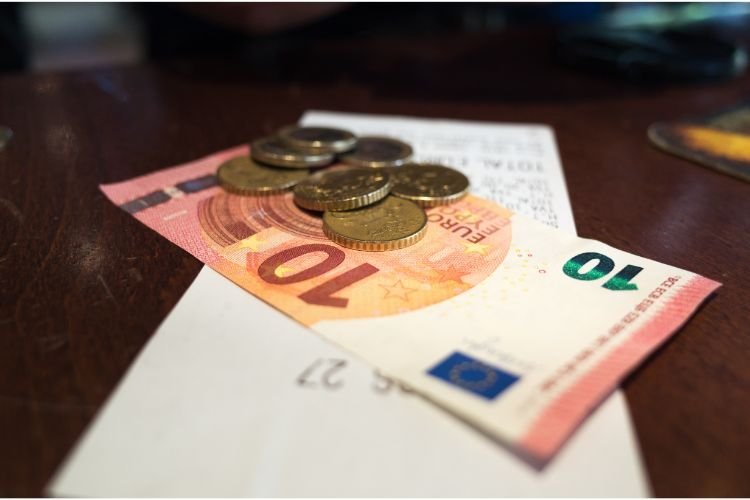
If you’ve ever stood at a checkout counter in France wondering whether to ask for a ticket, a reçu, or a facture… you’re not alone.
In English, we casually use “receipt” and “bill.”
In French, the word depends entirely on the situation.
Here’s your clear, practical guide to French words for receipt and bill — and when to use each one correctly.
How to Say “Receipt” and “Bill” in French (Without Getting Confused)
Un ticket — The Everyday Store Receipt
Meaning: A small printed receipt from a register
Use it for: Shops, supermarkets, bakeries, pharmacies, cafés
This is the most common word you’ll hear in daily life. Although it’s spelled the same as in English, the pronunciation is different. In French, ticket is pronounced tee-kay (/tee-kɛ/).
At the supermarket, the cashier may ask:
Vous voulez le ticket ?
Do you want the receipt?
This refers to the little printed slip that shows what you bought.
When to use “ticket”
- Grocery store purchases
- Clothing shops
- Bakeries
- Small everyday transactions
Un reçu — Official Proof of Payment
Meaning: Written confirmation that payment has been received
Use it for: Administrative, legal, or formal contexts
A reçu is more official than a ticket. It’s not just a shopping slip — it’s proof of payment.
You might request a reçu for:
- Rent payments
- School fees
- Donations
- Administrative paperwork
- Association memberships
Example:
Pouvez-vous me faire un reçu ?
Could you issue me a receipt?
Une facture — An Invoice or Bill You Owe
Meaning: A bill requesting payment
Use it for: Utilities, contractors, professional services, online orders
This is where English speakers often get confused.
A facture is usually something you owe — not proof that you’ve already paid.
Examples:
- Electricity bill
- Internet bill
- Plumber invoice
- Accountant fees
Je dois payer cette facture avant le 15 mars.
I need to pay this bill before March 15.
After payment, you might see:
Facture acquittée
(Paid invoice)
L’addition — The Restaurant Check
Meaning: The bill at a restaurant
Use it for: Sit-down restaurants
At the end of a meal, you say:
L’addition, s’il vous plaît.
You do not usually say le ticket in a restaurant when asking for the bill.
After you pay, you may receive a printed ticket, but when requesting the check, it’s always l’addition.
5. Une note — More Formal or Professional
You’ll see this in more official or traditional contexts:
- Note de frais (expense report)
- Note d’honoraires (professional fee statement)
Some traditional restaurants may say la note, but in everyday speech, l’addition is far more common.
Quick Comparison Table
| French Word | English Meaning | When To Use It |
| un ticket | store receipt | Everyday purchases |
| un reçu | official receipt | Proof of payment |
| une facture | invoice/bill | Money owed |
| l’addition | restaurant check | At the end of a meal |
| une note | formal bill | Professional context |
Cultural Tip: Why Cashiers Now Ask About Your Receipt
Since 2023, most businesses must ask whether you want your receipt instead of printing it automatically. This is part of France’s effort to reduce paper waste.
You’ll often hear: Le ticket, c’est bon ? or Vous voulez le ticket ?
If you don’t need it, you can simply say: Non merci.