French Cooking Terms Explained: Pots, Pans, Utensils, Appliances, and Kitchen Vocabulary You’ll Need in France
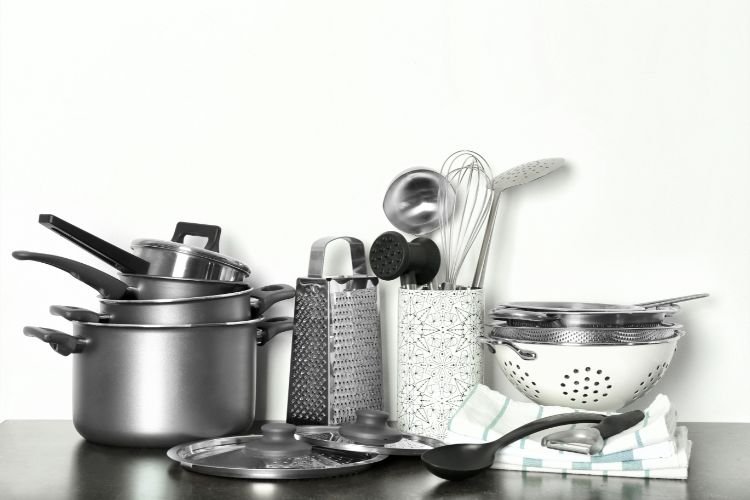
One of the adventures of moving to France is learning a whole new set of kitchen vocabulary. Whether you’re reading a French recipe, shopping for cookware, or setting up your kitchen after a move, you’ll quickly discover that many cooking terms don’t translate exactly into English.
Some are easy to recognize, while others can be surprisingly confusing. For example, a casserole in France is a saucepan, not a baked casserole dish. A faitout isn’t something you’ll find in most North American kitchens, and a cocotte refers to a lidded cooking pot rather than anything from the farmyard.
This guide covers the most common French cooking terms for cookware, utensils, kitchen appliances, and cooking methods so you can feel more confident cooking in France.
French Pots and Pans Vocabulary
| French | English |
|---|---|
| Une casserole | Saucepan |
| Une marmite | Large pot / stockpot |
| Un faitout | Large covered cooking pot |
| Une cocotte | Dutch oven / lidded casserole pot |
| Une poêle | Frying pan / skillet |
| Une poêle antiadhésive | Nonstick skillet |
| Une sauteuse | Sauté pan |
| Une poêle à griller | Grill pan |
| Un wok | Wok |
| Une crêpière | Crêpe pan |
| Un plat à gratin | Gratin dish / baking dish |
| Une plaque de four | Baking sheet |
| Une plaque à pâtisserie | Baking tray |
| Un moule à gâteau | Cake pan |
| Un moule à tarte | Tart pan |
| Un moule à cake | Loaf pan |
What’s the Difference Between a Casserole, a Marmite, a Faitout, and a Cocotte?
These four terms often confuse English speakers because there aren’t always exact equivalents.
A casserole is a saucepan with a long handle, used for making sauces, cooking vegetables, rice, and smaller portions of food.
A marmite is a large pot, often used for soups, stocks, pasta, and large batches of food.
A faitout is a versatile large cooking pot with two side handles and a lid. It’s commonly used for stews, soups, braises, and one-pot meals.
A cocotte is usually heavier and often made from cast iron. Similar to a Dutch oven, it’s designed for slow-cooked dishes, braises, and roasts.
Common Kitchen Utensils
| French | English |
|---|---|
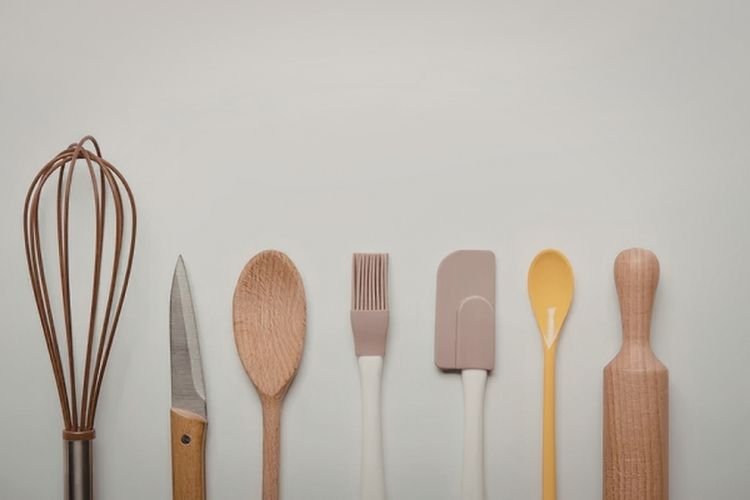
| Une spatule | Spatula |
| Une cuillère en bois | Wooden spoon |
| Une louche | Ladle |
| Un fouet | Whisk |
| Une écumoire | Slotted spoon / skimmer |
| Une pince de cuisine | Kitchen tongs |
| Un éplucheur | Vegetable peeler |
| Un économe | Vegetable peeler |
| Une râpe | Grater |
| Un couteau de chef | Chef’s knife |
| Un couteau d’office | Paring knife |
| Une planche à découper | Cutting board |
| Un ouvre-boîte | Can opener |
| Un tire-bouchon | Corkscrew |
| Une passoire | Colander / strainer |
| Un tamis | Sieve |
| Un chinois | Fine conical strainer |
| Un saladier | Mixing bowl |
| Un rouleau à pâtisserie | Rolling pin |
| Une balance de cuisine | Kitchen scale |
Éplucheur vs Économe
You’ll see both éplucheur and économe used in France. They generally refer to the same kitchen tool: a vegetable peeler. Économe is especially common in everyday French.
Common Kitchen Appliances in France
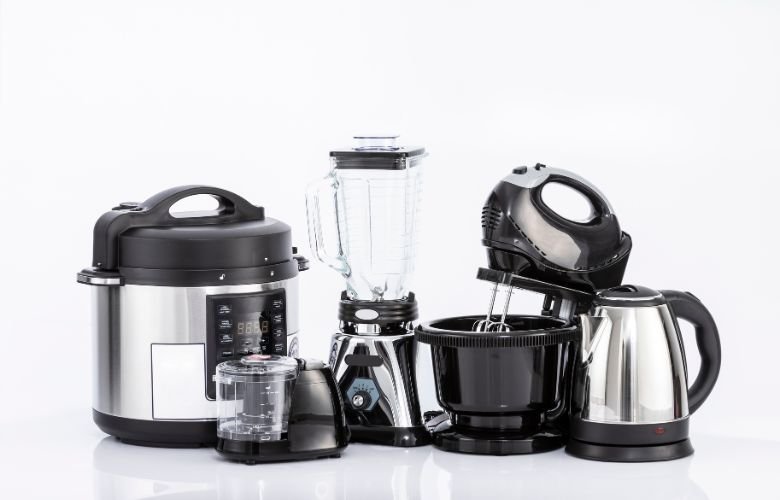
If you’re furnishing a kitchen in France or shopping online for appliances, these are some of the most useful terms to know.
| French | English |
|---|---|
| Un four | Oven |
| Un four à micro-ondes | Microwave |
| Un réfrigérateur | Refrigerator |
| Un frigo | Fridge |
| Un congélateur | Freezer |
| Une cuisinière | Stove or range |
| Une plaque de cuisson | Cooktop / hob |
| Une plaque à induction | Induction cooktop |
| Une plaque vitrocéramique | Ceramic cooktop |
| Une hotte aspirante | Range hood |
| Un lave-vaisselle | Dishwasher |
| Un robot ménager | Food processor |
| Un mixeur | Blender |
| Un mixeur plongeant | Immersion blender |
| Un batteur électrique | Hand mixer |
| Un robot pâtissier | Stand mixer |
| Une machine à café | Coffee maker |
| Une cafetière | Coffee maker / coffee pot |
| Une bouilloire | Electric kettle |
| Un grille-pain | Toaster |
| Une friteuse | Deep fryer |
| Un autocuiseur | Pressure cooker |
| Une cocotte-minute | Pressure cooker |
A Note About Coffee Makers
The word cafetière can refer both to the machine used to make coffee and to the coffee pot itself. In everyday French, many people simply refer to any coffee maker as la cafetière.
Measuring and Baking Terms
| French | English |
|---|---|
| Une cuillère à soupe | Tablespoon |
| Une cuillère à café | Teaspoon |
| Un verre doseur | Measuring jug |
| Peser | To weigh |
| Mesurer | To measure |
| Mélanger | To mix |
| Incorporer | To incorporate |
| Tamiser | To sift |
| Étaler | To roll out or spread |
A Quick Note About French Recipes
Unlike many American recipes, French recipes typically rely on weight measurements rather than cups. Ingredients are usually listed in grams, making a kitchen scale one of the most useful tools to have in a French kitchen.
French Cooking Methods You’ll See in Recipes
| French | English |
|---|---|
| Faire bouillir | To boil |
| Mijoter | To simmer slowly |
| Faire revenir | To sauté or lightly brown |
| Saisir | To sear |
| Rôtir | To roast |
| Griller | To grill |
| Cuire au four | To bake |
| Frire | To fry |
| Pocher | To poach |
| Cuire à la vapeur | To steam |
| Réchauffer | To reheat |
| Mélanger | To mix |
| Remuer | To stir |
| Battre | To beat |
| Fouetter | To whisk |
| Pétrir | To knead |
| Émincer | To thinly slice |
| Hacher | To chop |
| Couper en dés | To dice |
Two Cooking Terms Worth Knowing
Faire revenir
This is one of the most common instructions in French recipes and doesn’t have a perfect English equivalent. It generally means cooking ingredients such as onions, vegetables, or meat in a small amount of oil or butter until they become lightly browned and aromatic.
Mijoter
Mijoter means cooking slowly over low heat for an extended period. It is commonly used for soups, stews, sauces, and many traditional French comfort foods.
Helpful French Recipe Instructions
| French | English |
|---|---|
| Ajouter | Add |
| Incorporer | Fold in or incorporate |
| Égoutter | Drain |
| Assaisonner | Season |
| Préchauffer le four | Preheat the oven |
| Couvrir | Cover |
| Découvrir | Uncover |
| Servir | Serve |
| Laisser refroidir | Let cool |
| Porter à ébullition | Bring to a boil |
| Faire fondre | Melt |
| Réserver | Set aside |
Specialty Equipment You May See in French Kitchens
| French | English |
|---|---|
| Une mandoline | Mandoline slicer |
| Un moulin à légumes | Food mill |
| Une terrine | Terrine mold |
| Un chinois | Fine conical strainer |
| Une cocotte en fonte | Cast-iron Dutch oven |
| Une pierre à pizza | Pizza stone |
| Un siphon | Culinary siphon / whipped cream dispenser |
Your French Kitchen Cheat Sheet
Learning French cooking vocabulary makes grocery shopping, reading recipes, and equipping your kitchen in France much easier. While many items are similar to what you may have used at home, the names—and sometimes the cooking traditions behind them—can be quite different.
The good news is that once you learn the basics, you’ll be able to follow French recipes with much more confidence. You may even discover a few new tools, techniques, and favorite dishes along the way.
Keep this article or this downloadable guide handy the next time you’re browsing a French recipe, shopping for cookware, or wandering through the kitchen section of a French hypermarket. You’ll be surprised how quickly these terms become second nature.