The Route du Mimosa: Chasing Winter Sunshine in Southern France
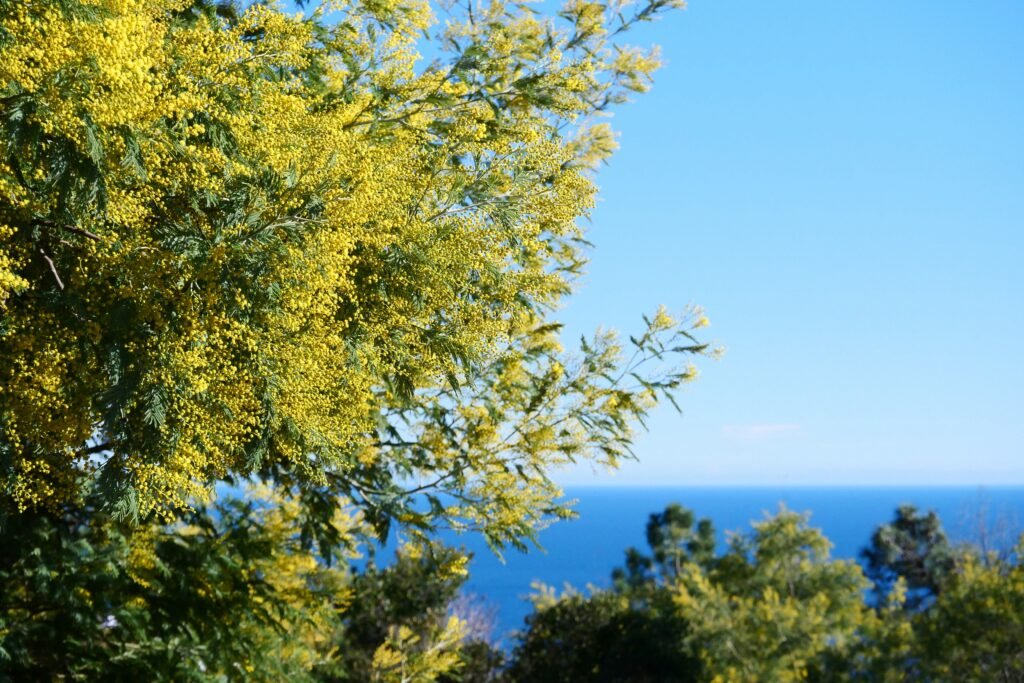
While much of Europe is wrapped in gray skies and bare trees, southern France quietly bursts into color. From January through early spring, hillsides along the Côte d’Azur glow with clouds of bright yellow flowers, filling the air with a soft, honeyed perfume. This is mimosa season, and there’s no better way to experience it than by following the famous Route du Mimosa.
Part road trip, part floral pilgrimage, the Route du Mimosa is one of France’s most charming winter itineraries — especially if you love off-season travel, small villages, and landscapes that impress even in the middle of winter.
What Is the Route du Mimosa?
The Route du Mimosa is a signposted scenic route stretching roughly 130 kilometers (80 miles) across southeastern France. It runs from Bormes-les-Mimosas on the Mediterranean coast to Grasse, the historic perfume capital of France.
Rather than being a single road, the route links eight towns and villages that celebrate mimosa through landscapes, festivals, markets, and events. The journey takes you from sea views and palm trees into forested hills and traditional Provençal villages — all framed by golden mimosa blossoms.
Best time to go: January to March, with peak blooms typically between late January and mid-February (weather dependent).
A Quick Note: What Is “Mimosa” in France?
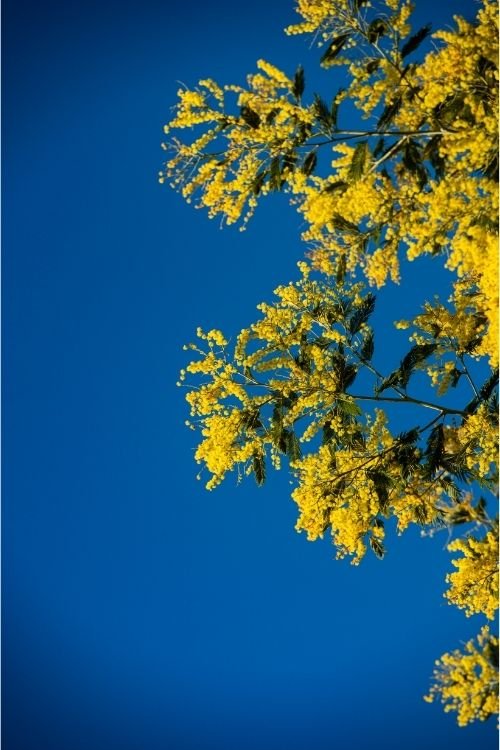
You might picture a brunch cocktail made with orange juice and sparkling wine, but in France, mimosa means something entirely different. The name refers to the fluffy, golden flowers of acacia trees, most commonly Acacia dealbata. Introduced from Australia in the 19th century, mimosa quickly adapted to the mild winter climate of the French Riviera. Blooming in the heart of winter, it became a defining feature of the landscape—and an enduring symbol of the region’s identity.
Unlike spring blossoms elsewhere, mimosa blooms in winter, which is why it feels so magical — and so unexpected — to see entire hills glowing yellow while much of Europe is still dormant.
The 8 Stops Along the Route du Mimosa
You can follow the route in either direction, but it’s traditionally presented from west to east, ending in Grasse.
1. Bormes-les-Mimosas
The official starting point, Bormes-les-Mimosas is a medieval hilltop village overlooking the sea. As the name suggests, mimosa is everywhere here — lining roads, filling gardens, and cascading down hillsides.
Wander the old town, enjoy sweeping views of the Mediterranean, and ease into the slow rhythm of the route.
2. Le Rayol-Canadel-sur-Mer
Nestled between sea and hills, Le Rayol-Canadel-sur-Mer offers a more botanical perspective. The area is known for Mediterranean landscapes and exotic plants that thrive in the mild climate, making it a beautiful transition between coast and countryside.
This is a lovely place to stop for a walk and simply enjoy the contrast of deep blue sea and bright yellow blooms.
3. Sainte-Maxime
Across the Gulf of Saint-Tropez, Sainte-Maxime adds a lively Riviera atmosphere to the route. Mimosa brightens parks, promenades, and surrounding hills, while cafés and markets keep things buzzing even in winter.
It’s a good spot for lunch or a seaside stroll before heading inland.
4. Saint-Raphaël
Saint-Raphaël blends coastal scenery with access to the Esterel Massif, where red rock hills meet golden mimosa. This stretch is especially photogenic, with winding roads and dramatic viewpoints.
5. Mandelieu-la-Napoule
Often called the “capital of mimosa,” Mandelieu-la-Napoule is one of the highlights of the route. The town hosts the famous Fête du Mimosa, typically held in February, featuring parades, floats covered in flowers, markets, and festivities.
If you’re visiting during festival time, plan extra time — this is where mimosa culture truly comes alive.
6. Tanneron
For many travelers, Tanneron is the most spectacular stop. Known for its mimosa forests, this area offers sweeping hillsides completely blanketed in yellow.
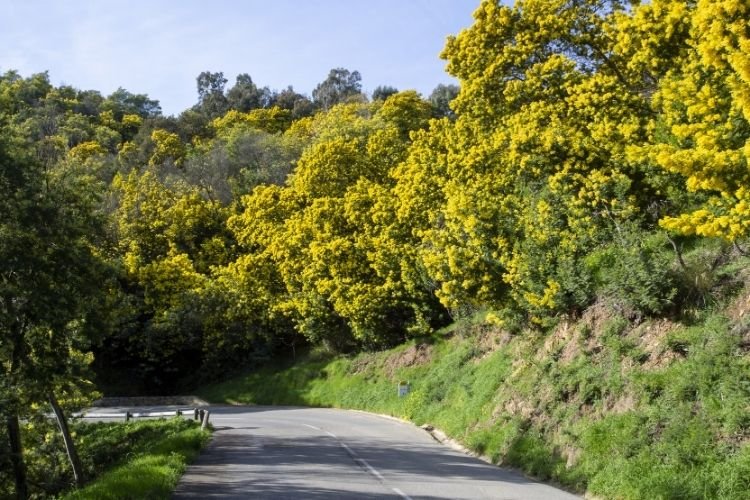
This is the place for those classic “Route du Mimosa” photos — winding roads, sunlit blooms, and that unmistakable winter-in-Provence glow.
7. Pégomas
Pégomas has a long tradition of mimosa cultivation. The town is known for its flower production and agricultural heritage, offering a quieter, more local feel as the route approaches its final destination.
8. Grasse
The route ends in Grasse, the world-famous center of French perfumery. Mimosa plays a role in fragrance creation, making this a fitting finale to the journey.
Here, you can explore perfume museums, historic streets, and panoramic views over the hills — a perfect blend of culture, scent, and scenery.
How to Experience the Route du Mimosa
Do You Need a Car?
Yes — a car is strongly recommended. While some towns are accessible by train or bus, the most beautiful stretches of the route wind through hills and countryside that are difficult to reach without your own vehicle.
How Long Should You Plan?
1–2 days: Highlights only (select a few key towns)
3–5 days: A relaxed pace with villages, walks, festivals, and cafés
What to Pack
- Layers (sunny days, cool mornings)
- Comfortable walking shoes
- Sunglasses (the yellow + sunlight is intense!)
- Allergy meds if you’re sensitive to pollen or fragrance
More information can be found on the official website.
Why the Route du Mimosa Is So Special
The Route du Mimosa isn’t about ticking off sights — it’s about seasonal beauty, slow travel, and seeing a different side of southern France. Winter crowds are minimal, light is soft and golden, and the landscape feels almost surreal.
If you’ve ever wanted a reason to visit the Côte d’Azur outside of summer, this is it. Sometimes, the best time to go… is exactly when no one else is looking.
Other winter highlights in this region
If you’re visiting the Côte d’Azur in February, mimosa season isn’t the only highlight. Other festive winter events in the region include the famous Menton Lemon Festival and the Carnaval of Nice, both of which transform the Riviera into colorful celebrations of traditions.