Shopping at a French Marché: How Locals Buy Fresh Food Every Week
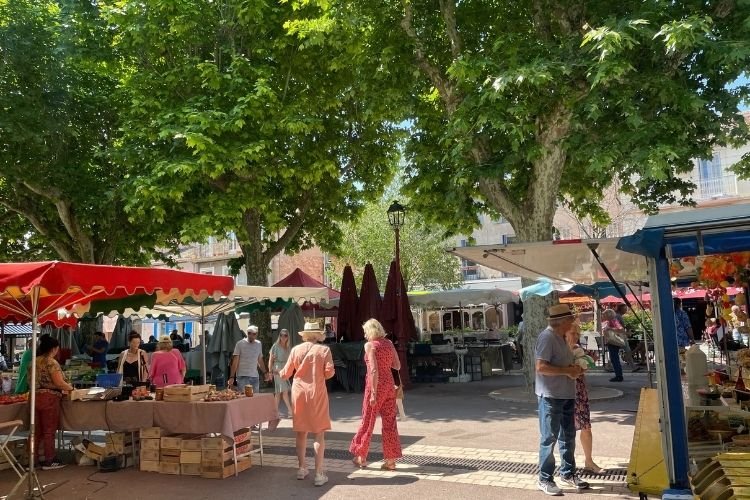
One of the things that stands out about life in France is the marché—the weekly food market that appears like clockwork, fills the streets with color and conversation, and then disappears again by lunchtime. In many towns, markets are easy to reach on foot, turning grocery shopping into a short walk rather than a drive.
We have an excellent weekly market within walking distance of our house. At first, I was hesitant and unsure how to shop there, self-conscious about my French and unfamiliar with the norms of selecting and paying for items. Over time, that uncertainty faded, and I’ve even become the proud owner of a collapsible, rolling shopping cart—what the French call a chariot de courses—useful for carrying larger market hauls or the inevitable melon or two.
Shopping at a French marché isn’t a novelty or a tourist attraction for locals. It’s simply how many people buy their groceries.
What Is a French Marché?
A marché is a market where vendors sell food and everyday goods, usually on a regular schedule. Many marchés are open-air, set up in town squares, along main streets, or near churches. Vendors arrive early, assemble their stalls, and sell until late morning or early afternoon.
France also has covered markets, often called a marché couvert or halle. These are permanent market buildings where stalls are open several days a week—or even daily. Covered marchés are especially common in larger towns and cities, and they offer the same kinds of products as outdoor markets, just protected from the weather.
Why Marchés Are So Popular in France
French markets remain popular because they fit naturally into everyday routines. Markets are typically located in walkable town centers, making it easy to stop by on foot. Many shoppers visit their market weekly, buying what they need for the next few days rather than stocking up all at once.
Freshness and seasonality play a huge role. Fruits and vegetables are sold when they’re in season, often grown locally or regionally. Food choices are shaped by what’s available that week rather than by long, fixed shopping lists.
Another reason marchés remain popular is that each town’s market tends to develop its own character and focus over time. One town may be especially well known for fresh flowers or plants, while another might have an excellent cheese selection, olive vendors, seafood, or even antiques. Because markets operate on different days of the week, people will sometimes plan trips to nearby towns specifically to visit certain marchés on their designated market day.
There’s also a strong social element. Vendors and customers often know each other, and even brief exchanges feel personal rather than transactional.
What You Can Buy at a French Marché
While food is the main draw, the variety at a French marché can be surprisingly broad.
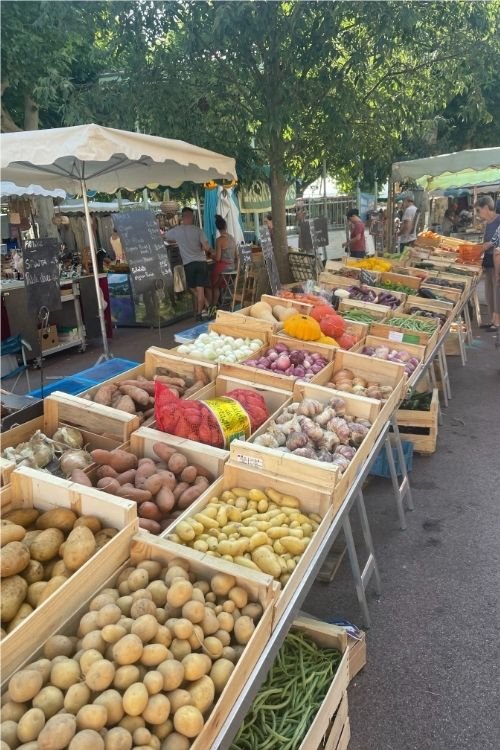
Fresh produce is the centerpiece: seasonal fruits and vegetables sold loose, often without packaging. You’ll see what’s in season immediately—nothing more, nothing less.
Cheese and dairy stalls are common, offering local and regional cheeses made from cow, goat, or sheep’s milk, along with yogurt, butter, and crème fraîche.
Meat, poultry, and fish are sold at open stalls, usually behind glass or laid on ice. Vendors cut meat to order, and poultry is often prepared on the spot. This can feel unusual to visitors at first, but it’s completely normal in France.
Olives, tapenades, and marinated vegetables are another staple, with dozens of varieties to choose from, often sold by weight.
You’ll also find honey, jams, dried fruit, spices, and other artisanal foods, many produced locally.
Markets often include plants and flowers, such as potted herbs, garden plants, and fresh-cut bouquets.
Finally, many marchés sell non-food items: clothing, scarves, shoes, tablecloths, linens, kitchen towels, baskets, and practical household goods. The market isn’t just about food—it’s an all-purpose weekly stop.
How Shopping at a Marché Works
Shopping at a marché follows its own unspoken rules. Customers usually wait their turn and ask the vendor for what they want, rather than picking items themselves. The vendor selects and weighs the produce, cheese, or meat. At some stalls, however, customers help themselves. Watch and follow the lead of other locals, or ask the vendor if you are unsure.
Most shoppers bring their own bags or baskets. Some stalls accept credit cards, but cash is still commonly used, especially at smaller stands.
Markets are typically busiest in the morning, and many people prefer to arrive early for the best selection.
Is the Marché More Expensive?
Prices vary depending on the product and the region. Some artisanal items may cost more than supermarket equivalents, but produce is often very reasonably priced for the quality. Portions are flexible, allowing you to buy exactly what you need.
For many people, the value lies not only in price but in freshness, flavor, and knowing where the food comes from.
Why French Marchés Remain a Staple of Daily Life
Whether open-air or covered, French marchés continue to play an important role in everyday life across France. They offer a practical way to buy fresh, seasonal food, support local producers, and maintain a connection between towns and the surrounding countryside.
For a closer look at regional market culture, see the dedicated guides to some of the best markets in Provence, the best markets in the Côte d’Azur, and the best markets in Paris.