Top Tools and Apps for Learning French

I’ve been using a variety of DIY apps and tools to improve my French, and I want to share some of those that work the best. Some are great for quick daily practice, others for deeper study—but all of them have helped me stay consistent and motivated while learning French. Of course, in-person or live courses are indispensable, but progressing in fluency requires many hours of practice and these are tools that can help you achieve that, as well as help you focus on subjects where you need some extra help.
In general, it’s best to choose a combination of resources that will allow you to work on all four core language skills of reading, listening, writing, and speaking. Here are some of my favorite options, which enable you to cover all the bases.
Comprensive programs
Step-by-step popular applications include Rocket French and Duolingo. Both offer a range of exercise types as well as listening and speaking features, but where Rocket French really shines is in its guided lessons, excellent grammar explanations, pressure-free exercises (no pass level required to proceed), role play practice, speech recognition, and ability to skip around as needed. If you are a beginner or a rusty intermediate, I recommend starting from the beginning and doing the entire course (Levels 1, 2, and 3). Its clear grammar explanations, combined with a thoughtful, well-structured progression, make Rocket French one of the best in its class. Grammar rules are layered onto familiar topics, making progress feel steady and manageable rather than overwhelming. It also incorporates French culture and offers some extra courses for additional role-playing scenarios and travel dialogues. A one-time lifetime license is available, and it’s a good value.
Duolingo is great for gamification, and sheer hours of content, but is missing the grammar and explanations you will find in other products. Is it still useful? Yes, but in my opinion it’s best as a practice tool only, helping to cement vocabulary and grammar that you learn elsewhere, and for making you stubbornly stick to your daily streak or friend quests with others. I find the voices used rather cartoonish and hard to understand at times. The “live” videocalls (available with Duolingo Max upgrade) are useful, but not as good as other options (and even frustrating at times when it comes to accurate speech recognition). Duolingo also offers a free version with ads, and you can’t beat that price.
Listening to French
Paul Noble has a series of three audiobooks that are excellent—Learn French with Paul Noble for Beginners, Next Steps in French with Paul Noble for Intermediate Learners, and French Conversation with Paul Noble. They are easy to listen to and have great tips for speaking and understanding the language. He makes good word associations and connections to English that are highly useful. YouTube is a wealth of free videos for lessons, tips, and explanations for every subject. TV5 Monde is a public broadcaster that offers a free app with video-based language learning. The radio equivalent would be RFI (Radio France International) with its app for learning French via audio-driven lessons around French news and cultural reporting. And don’t forget the value of watching movies in French. I recommend using English subtitles at first, then French as you progress, and then without any subtitles.
Writing French
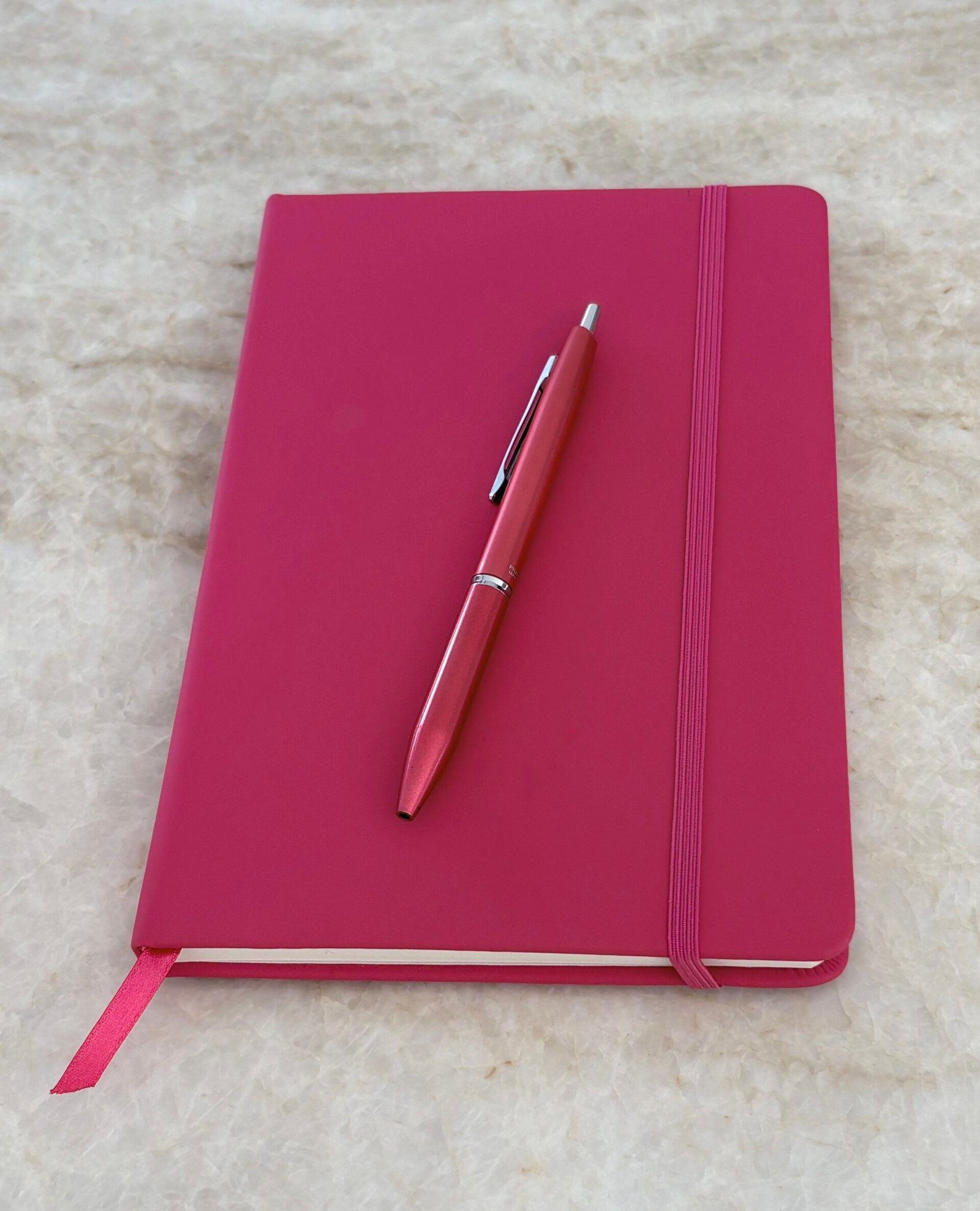
A new technique that I’ve been using is to write daily in a journal, which can really help you get used to putting your thoughts into words that you would naturally use. You can write about anything—yourself, your day, your hopes, your opinions, news events, describe a dream or tell a story, and anything that puts words in your personal voice onto paper. This might seem intimidating, especially for a beginner, but you can use a translator app like Google Translate or Deepl to help you out. This isn’t “cheating” but rather using a learning tool to help you understand how to put your words properly into French. The more you write, the more natural it becomes.
Reading French
Dual language books or e-books are readily available, which offer French on one side and English on the other. The Beelingua app also offers this same parallel text reading with stories and current events. You can even listen along to audio and click on words for instant translations. You can tailor the content according to your interests, too.
Some books about French that I’ve found useful are the Collins Easy Learning series (Complete French, French Conversations, and French Idioms) as well as How to Cheat at French Verbs by Karen Otoole.
Speaking French
The Langua app is an excellent speaking/listening tutor that lets you have live and incredibly realistic AI conversations. Many settings and customization are available to suit your preferences, your preferred AI voice (modeled on real people), and French level. You can see written transcriptions, definitions, response suggestions, and even switch to English for some words you don’t know. You can do role plays (or design your own very specific role play scenario customized to your situation) or just have open-ended conversations. You can save words and have them automatically incorporated into future conversations if you’d like. If you make a mistake, you can opt to have your “tutor” ask you to correct it. Of course, you can work with an in-person or online tutor, and that’s an excellent choice, but I was quite pleasantly surprised to learn how many advantages there can be with an AI program. You can use it as much as you want for a monthly or yearly subscription, so it is extremely economical. AI-based conversation practice is low-stress and judgment-free, letting you experiment, make mistakes, and build confidence without feeling self-conscious. I think the best of both worlds is to combine both, perhaps a weekly tutor with unlimited AI practice to supplement it.
Workbooks
The Hachette series of workbooks Exercices of Grammaire and Exercices of Vocabulaire in various levels are great ways to learn and practice both grammar and vocabulary. It’s hard to beat the old-fashioned way of filling out exercises to get those topics ingrained into your memory, and these workbooks do a good job of incorporating both a little teaching and a lot of practice in an approachable way.
Drilling and Review
I absolutely love Kwiziq and am so disappointed that I didn’t discover it earlier. Kwiziq uses a “brain map” strategy to help you learn what you already know and what you need to master. It’s better suited to use for drills and reviews or for those with some existing level of French, although it does have some course paths you can follow. But what it’s best at is filling in your gaps and driving in your knowledge of French grammar in a piece-by-piece way. You take mini quizzes to detect your weak areas, and it offers short, efficient lessons to help you overcome them. As you progress, you fill in your “brain map” which covers the beginner levels A0, A1, and A2, intermediate levels B1 and B2, and advanced level C1. You can work level by level, jump to the level it rates you in your pre-test, or hop around as you see fit. It can be a little confusing when you first start out trying to figure out how you should proceed, but bear with it because it’s a very effective program. Its primary use is for grammar mastery, but there are some features incorporating audio and writing. Because I find this program so incredibly useful, I will be adding a new blog post soon focused on Kwiziq and some tips to help take the confusion out and make the most of it.
Anki is a flashcard based mobile or desktop application that enables you to download (or make your own) French review flashcards. I purchased some “minimal pairs” flashcards that drill you on being able to identify subtle differences in similar words and sounds which has helped fine tune my listening comprehension and pronunciation. Flashcard sets with different length sentences are available for free on the Anki site and are also incredibly useful to build grammar and vocabulary in context.
Conjuu is a verb conjugation app that you can use to practice verbs, building your own study lists or choosing from pre-made versions. You can customize your practice by selecting the specific verb tenses that you’d like to include. It also includes audio files for proper pronunciation.
Social Media
Yes, I’ve actually found Instagram, Facebook, and Tiktok reels to be great ways to learn proper pronunciation and realistic use of words and phrases, and often in a fun, bite-sized way. It’s easy to find popular profiles to follow, and a great supplement to fill in a little extra time here and there. There is “book French” and “street French”, and social media channels can help you understand both.
Why One Resource Isn’t Enough
Fluency doesn’t come from a single app or method—it’s built through consistent exposure from many angles. Reading, listening, speaking, and writing all reinforce one another, and each tool fills a different gap. By mixing apps, media, and conversation practice, you create the kind of rich, varied input that helps French start to feel natural rather than translated.