The French Baguette: Why the Baguette Tradition Is So Special
It is such a familiar French cliché: someone walking down the street with a long loaf of bread tucked under their arm, the end poking out of a thin paper sleeve. But it’s a real, everyday occurrence and one of my favorite small rituals to partake in. But here’s the part many visitors don’t realize right away: not all baguettes are the same. And if you want to understand why French people care so much about bread, you need to meet the baguette tradition.
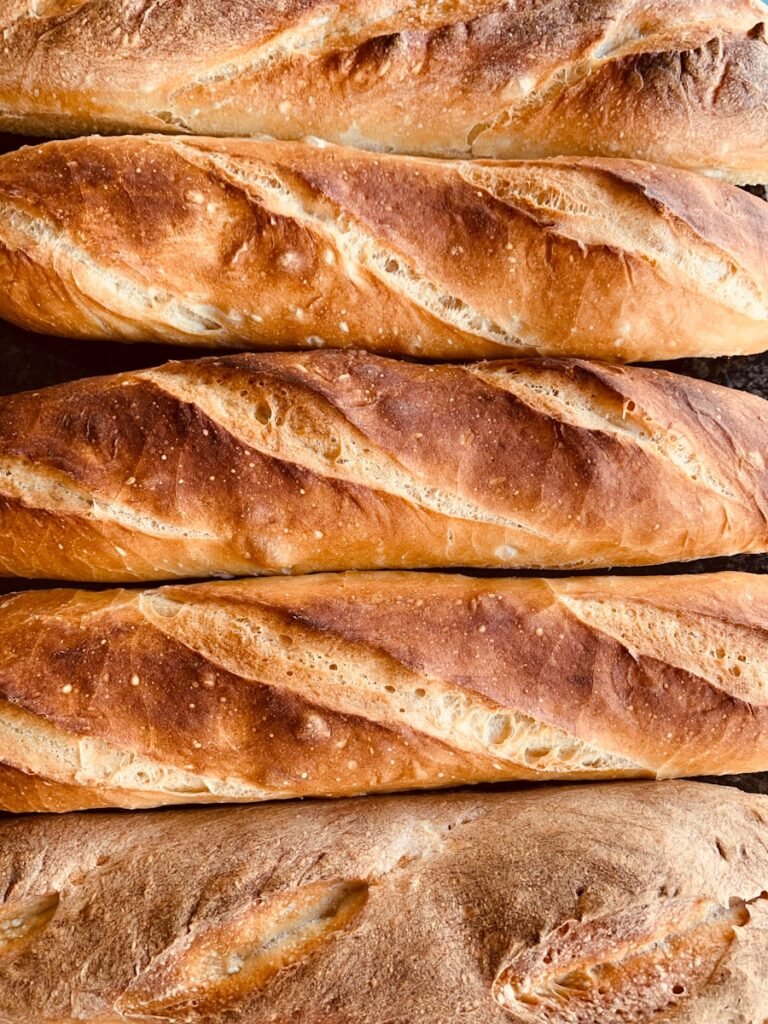
What Exactly Is a French Baguette?
A classic baguette is long and slender, with a crisp, crackling crust and a soft, airy interior. Freshness matters enormously. In France, bread is expected to be eaten the day it’s baked. Tomorrow’s baguette is already considered “old,” even if it’s still technically edible.
This obsession with freshness explains why bakeries are everywhere, why people buy bread daily, and why baguettes are rarely fully wrapped. Bread is treated as something meant to be eaten the day it’s baked, not stored for later.
Baguette vs. Baguette Tradition: What’s the Difference?
They may look similar at first glance, but legally and culturally, they are very different. A regular baguette may include additives or rely on partially industrial processes. It’s not necessarily bad—but it’s not the same.
The baguette tradition (often called simply tradition) is protected by French law. To earn that name, the bread must follow strict rules:
- Only four ingredients: flour, water, yeast, salt
- No additives or preservatives
- No freezing of dough
- Mixed, shaped, and baked on site
Why the Baguette Tradition Is So Special
The magic of the baguette tradition lies in what isn’t added.
Because the dough ferments naturally and often rests longer, the flavor is deeper and more complex, with a slight nuttiness. The crust is thicker and more caramelized, with a crisper bite. The interior has irregular air pockets rather than a uniform crumb.
Ironically, the baguette tradition goes stale faster than industrial bread—and that’s exactly the point. It’s a sign that there are no preservatives extending its life. A real tradition baguette has a short, honest window of perfection.
If you want to spot a true baguette tradition, look for a darker, rustic crust, an uneven handmade shape, a rich wheaty aroma, and that unmistakable crackle when gently squeezed. It’s simple, pure, bread perfection.
A Brief History of the Baguette
Despite its timeless image, the baguette is relatively modern. Its rise is often linked to 19th- and early 20th-century France, when advances in milling made white flour more accessible.
Another often-cited influence is labor law. Early 20th-century regulations limited how early bakers could start work, pushing them toward breads that baked faster. The long, thin baguette was a practical solution.
The baguette tradition designation itself came much later, in 1993, when France formally protected traditional breadmaking methods—an intentional pushback against industrial food production.
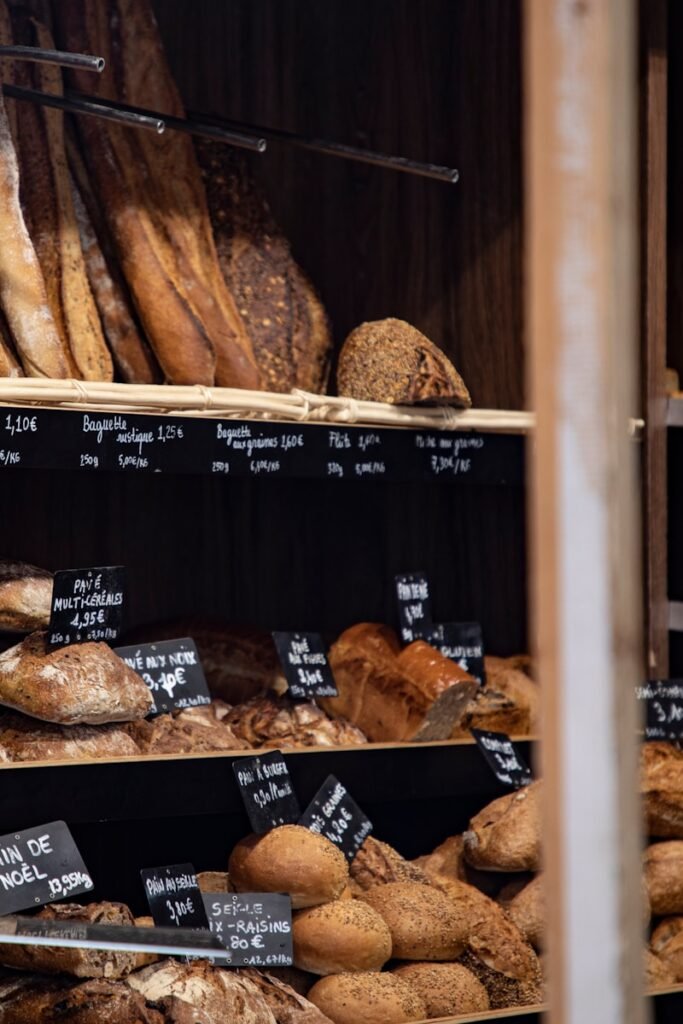
Other Popular Baguettes and French Bakery Breads
While the baguette tradition may be the gold standard, French bakeries offer many variations and alternatives, among them:
- Baguette de campagne – A mix of white and whole wheat flours, with a heartier flavor
- Baguette aux céréales – Studded with seeds like sesame, flax, or sunflower
- Baguette viennoise – Softer and slightly sweet, enriched with milk or butter
- Pain de campagne – A round or oval country loaf with a thick crust and chewy interior
- Pain complet – Whole wheat bread with a denser texture
- Pain au levain – Naturally leavened sourdough-style bread, prized for flavor and digestibility
Each has its place, but when people talk about real baguette culture, they’re almost always referring to the tradition.
The Baguette in Daily French Life (and How It’s Eaten)
Many people buy bread once or twice a day, timing errands around bakery hours. There’s a quiet pleasure in that short walk home with a warm baguette, paper bag already torn open at the end. Tearing off the crouton—the crispy end of the baguette—and eating it immediately is practically a ritual. It’s one of the few foods the French will unapologetically eat on the go. It’s a rare occurrence when baguette makes it back to our home with both ends intact.
At the table, baguettes are torn, not sliced. They’re used to accompany food, mop up sauce, or support a piece of cheese. Butter may appear at breakfast, but it’s not automatically served with bread at restaurants, where the baguette stands on its own as part of the meal. Eating plain bread—nothing on it at all—is perfectly normal.
There’s also a quiet superstition around bread: a baguette is never placed upside down on the table. One commonly cited explanation traces the habit back to earlier centuries, when loaves left inverted were said to be reserved for the local executioner. Over time, the gesture became associated with bad luck, and the habit stuck. Today, many people avoid it without thinking twice—not out of fear, but out of custom.
A Second Life for a Baguette
A baguette’s short life doesn’t mean it’s disposable. Refrigerating bread is generally avoided but freezing it is common practice if it won’t be eaten the same day. To revive a frozen or day-old baguette, many people simply sprinkle it lightly with water and place it in a hot oven for a few minutes. The moisture creates steam, restoring the crust and gently warming the interior—not making it new, but bringing it surprisingly close. And when bread is truly past its best, it still has a purpose: stale baguette becomes pain perdu, or “lost bread,” soaked in milk and egg and cooked until golden. Americans call it “French Toast” when cooked this way. It’s a quiet reflection of French food culture—nothing is wasted, and even yesterday’s bread still has value.
How to Order a Baguette in France
If you want the good stuff, ask for it—but say it the French way. A simple “une tradition, s’il vous plaît” is all you need, with tradition pronounced more like tra-dee-syohn, not the English tra-di-shun. In everyday speech, many people shorten it further and just ask for “une tradi.” If you ask for “une baguette” instead, you’ll usually receive the standard version by default. That small shift in wording—and pronunciation—quietly signals that you know what you’re ordering.
Why the Baguette Still Matters Today
In 2022, UNESCO recognized French bread-making know-how as part of humanity’s intangible cultural heritage. Not because it’s fancy, but because it’s everyday—and still done with care.
The baguette tradition represents something deeply French: respect for simple ingredients, pride in daily rituals, and the belief that even the most ordinary food deserves attention.