Aging Gracefully: The Story Behind French Wine Barrels
Our home, like many in France, has a cave à vin (wine cellar). In French houses, a cave à vin is often a dedicated space tucked below ground. In apartments, it may be a smaller storage area in the basement, either included with the unit or available to rent.
Wine is not just a beverage here. It’s part of the country’s history, its landscape, and its economy. Entire regions are shaped by it. Generations have worked the same vineyards. And systems for storing and aging wine have been built into homes and buildings for centuries. Having a cellar isn’t about indulgence, it’s about culture and continuity.
Our final home project was to give our cellar a bit more attention. One of those improvements was buying a used French oak barrel to turn into a tasting table. What began as a beautiful, functional piece quickly sent me down a path of research into wine barrels—their craftsmanship, their history, and the ways they influence many of the wines we drink. In the process, it became more than décor; it became a meaningful reminder of the role these barrels can play in a wine’s character.
What looks like a simple barrel is actually the product of decades, sometimes centuries, of growth—formed from carefully selected oak and shaped by hand with remarkable precision. It gave me a new appreciation for the skill and intention behind something so easy to take for granted. Owning one now feels less like having a decorative object in our cellar and more like having a small connection to the heritage behind French wine.
The Types of French Oak Wine Barrels
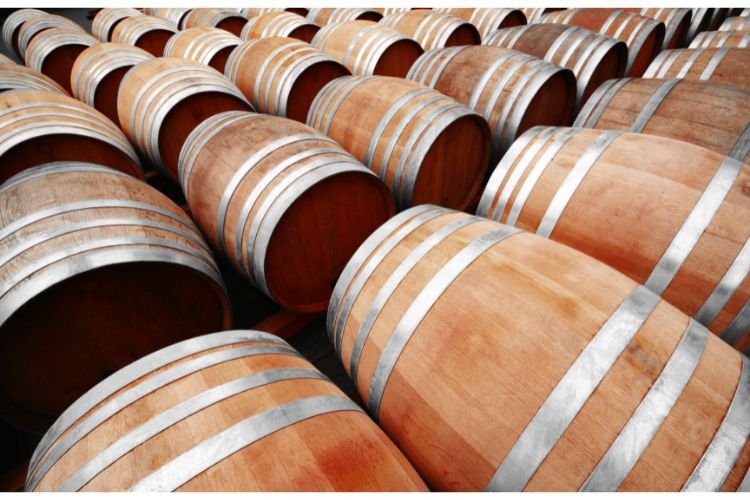
A classic French wine barrel, most precisely called a barrique, holds about 225 liters, or roughly 300 bottles of wine. This size originated in Bordeaux and has become the standard reference for fine wine aging.
In terms of terminology, a barrique is the most precise word for the standard 225-liter barrel. However, in everyday French usage, you’ll also hear tonneau and fût. Both can be used more loosely to mean “barrel,” but in winery contexts, tonneau often refers to a larger-format barrel (typically around 400–600 liters), used when a more subtle oak influence is desired.
When you see a label like élevé en fûts de chêne, it simply indicates the wine was aged in oak barrels, often in barriques, even if the exact size isn’t specified.
Why Barrels Matter to the Cost of Wine
French oak barrels are a significant investment, and that cost is built directly into the wine. A new barrel typically ranges from €800 to €1,500, with top cooperages exceeding that. Each barrel holds about 225 liters—roughly 300 bottles—which means the added cost per bottle can be around €3 to €5 before any other production costs are considered.
But beyond the price of the barrel itself, size plays an important role. Smaller barrels, like the standard 225-liter barrique, have a higher ratio of wood surface area to wine. That increased contact allows for more interaction between the oak and the wine—resulting in greater structure, more aromatic influence, and more noticeable flavor development. It also means more barrels are required to age the same volume of wine, which increases production costs.
Larger formats, such as tonneaux, reduce that surface-to-volume ratio. The oak influence becomes more subtle, and fewer barrels are needed overall. In that sense, barrel size shapes not only the style of the wine, but also its economics.
French Oak Barrels Around the World
French barrels are not just used in France. They are a global standard in premium winemaking. Today, around 65% of French barrel production is exported, supplying wineries across the world. The United States is the largest single market, receiving around one-third of those exports and representing a significant share of total export value.
What’s striking is that France itself uses only a portion of what it produces. The majority of French oak barrels are shaping wines far beyond its borders, influencing styles from Napa Valley to Tuscany.
The Forest Behind the Barrel
Each barrel begins decades earlier in the forest. The oak trees used are often between 100 and 200 years old, grown in carefully managed French forests such as Allier and Tronçais. These forests are known for producing tight-grained oak that contributes to the subtlety associated with French barrels.
What’s less visible, but just as important, is how closely these forests are controlled. Much of France’s oak supply comes from state-managed forests overseen by the Office National des Forêts, where harvesting is planned decades in advance. Trees are selectively marked, often years before they are cut, and regeneration is carefully maintained to ensure long-term sustainability.
This level of oversight isn’t just about conservation—it’s about quality. Slow, consistent growth produces the tight grain that makes French oak so prized in winemaking.
A single tree produces only about two barrels, which adds another layer to their value. When you consider the time required to grow, harvest, and season the wood, it becomes clear that a barrel represents far more than its final form.
How French Wine Barrels Are Made
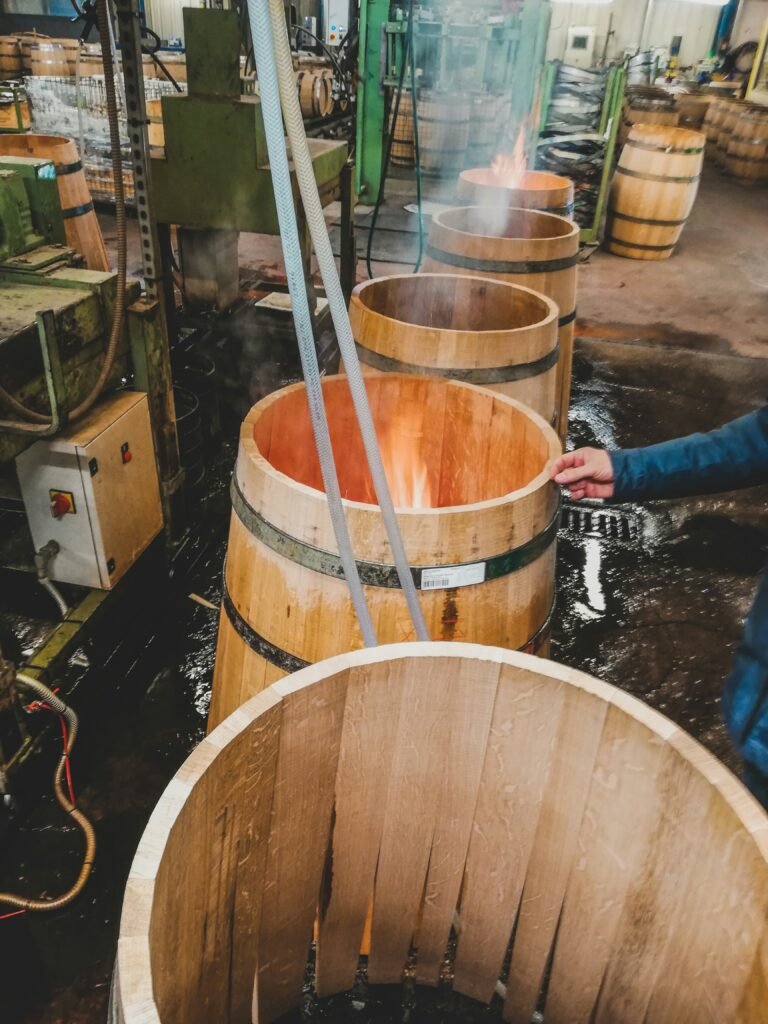
French barrels are made by artisans known as coopers, using techniques that have changed very little over time. It’s a process that combines patience, craftsmanship, and precision, and helps explain both the cost and the prestige of French oak.
The oak is split along the grain rather than sawn, then left to dry outdoors for two to three years. This natural seasoning is essential to the final quality of the wood.
The staves are then shaped, assembled, and heated over fire to bend them into form. As the barrel takes shape, the interior is toasted over an open flame. Coopers can control this step with remarkable precision, adjusting the intensity and duration of the heat to achieve different toasting levels—from light to medium to heavy—depending on the winemaker’s preferences.
This toasting is a defining step in the barrel’s character, influencing how it will interact with the wine. Finally, each barrel is sealed and tested before it leaves the cooperage.
How Barrels Influence Flavor
French oak barrels shape wine in a way that is both structural and aromatic. Rather than dominating, they tend to refine. You’ll often notice subtle notes of spice, toast, cedar, and restrained vanilla, along with a textural effect that softens tannins and supports aging.
One of the most important, and often overlooked, factors is the level of toasting inside the barrel. During production, the interior is exposed to controlled heat, and coopers adjust both the intensity and duration to create different profiles. A lighter toast tends to emphasize structure and tannin, while a medium toast brings out balanced notes of spice and warmth. Heavier toasts can introduce deeper, more pronounced aromas such as smoke, coffee, or even a hint of chocolate.
What’s less visible but equally important is how barrel size and age influence that effect. Smaller barrels intensify the interaction between wine and wood, leading to more pronounced oak character. Larger barrels soften that exchange, allowing the wine itself to remain more in the foreground.
The age of the barrel also matters. New barrels contribute more flavor, while older barrels shift toward neutrality, offering structure without overt oak influence.
Together, these choices allow winemakers to fine-tune both the style and balance of a wine with remarkable precision.
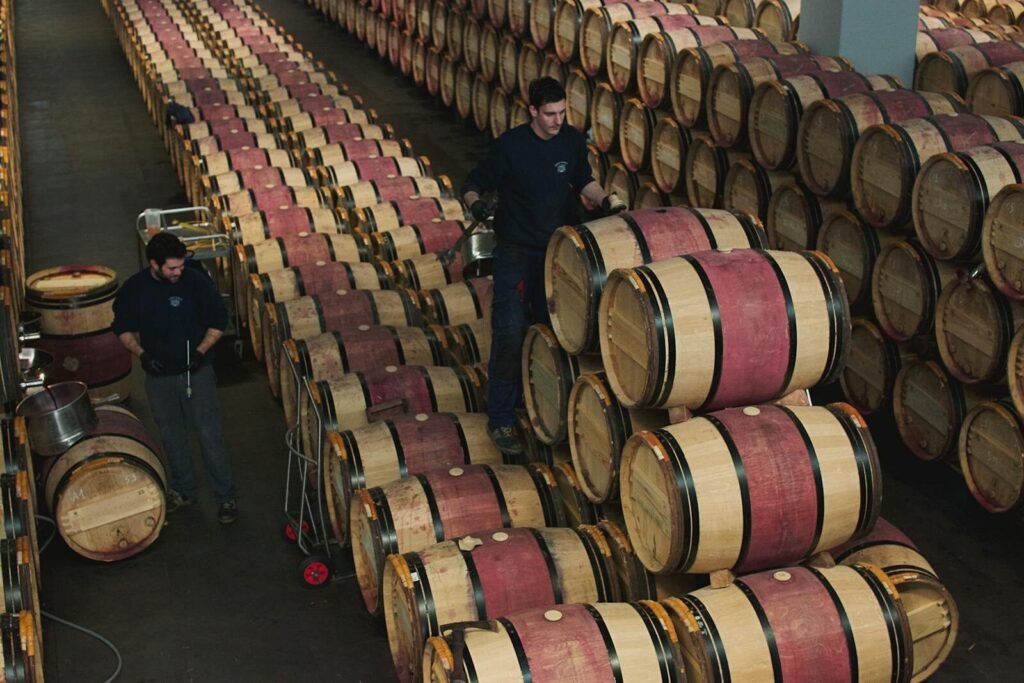
Wine-Stained Barrels
In working cellars, it’s common to see irregular drip marks running down the sides of barrels. These come from topping up, the routine process of adding wine to replace what slowly evaporates during aging. The wine is added through the small opening on the front of the barrel, known as the bung hole (trou de bonde in French), which is sealed with a wooden stopper called a bung (bouchon de bonde). Over time, those small overflows leave behind faint streaks and stains that build into a natural patina.
But there’s also a more deliberate version of this. In some wineries, especially those with tasting rooms, the central section of the barrel (the widest middle part), known in English as the bilge, is sometimes intentionally darkened on barrels holding red wines. The bilge is referred to as le ventre du tonneau or la panse in French. This can be done using wine or wine sediment (lees) to create a deeper, more uniform reddish tone across the entire middle of the barrel, giving it a more consistent appearance while also camouflaging natural wine stains.
The Lifecycle of a Barrel
Barrels evolve over time in how they interact with wine, and winemakers often think about this in terms of vintages. A new barrel has the strongest influence. During its first vintage, it contributes the most noticeable oak character, including aromas, tannin, and texture. By the second and third vintages, that impact becomes more integrated and balanced, often considered ideal for many styles of wine.
After about four to five vintages, the barrel becomes largely neutral. It still allows for slow oxygen exchange and gentle aging, but it no longer imparts significant oak flavor. In practical terms, most barrels are actively used for around three to five vintages before being retired from flavor-driven aging.
Because of this, wineries cycle barrels through different roles. New barrels are reserved for wines where oak influence is part of the intended style, while older barrels are used when the goal is structure without added flavor.
A Second Life for Wine Barrels
Even after their primary use in winemaking, these barrels retain value. Depending on their condition and origin, used French oak barrels can still sell for hundreds of euros. Their durability and connection to winemaking give them a second life that’s both practical and sought after.
They’re turned into furniture, planters, and decorative pieces, but they never entirely lose what they were. Each one still carries the marks of its former purpose: the centuries-old oak itself, the staining, the craftsmanship, and the years it spent helping shape wine.
Now, every time we use ours, it brings a different perspective. The barrel isn’t just part of the process anymore—it’s right there with us, a small but tangible piece of French winemaking history that makes the wine feel just a little more alive.