Réveillon: France’s Elegant New Year’s Eve Tradition
On December 31 in France, New Year’s Eve doesn’t begin with a countdown—it begins at the table. Known as Réveillon, this deeply ingrained tradition is less about parties and noise and more about lingering meals, good wine, and savoring the final hours of the year with the people you love. It is quintessentially French in its devotion to food and togetherness.
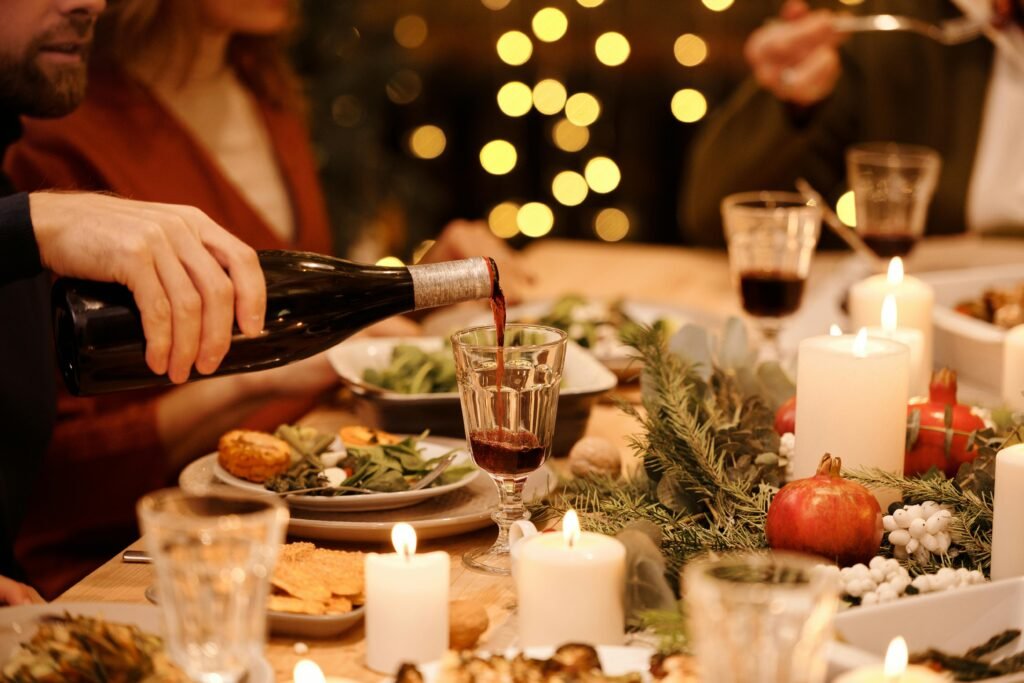
What Is Réveillon?
The word Réveillon comes from the French verb réveiller, meaning “to wake up.” Historically, it referred to meals eaten late at night, often after midnight. Today, Réveillon describes the festive dinner enjoyed on December 31, stretching late into the evening and often well past midnight as the New Year arrives.
This tradition also exists on Christmas Eve, but New Year’s Réveillon has its own personality. It is typically more adult, more indulgent, and often shared with close friends or extended family rather than children. The focus is less on gifts and more on the pleasure of being together and eating exceptionally well. The meal unfolds in courses, with conversation flowing easily between bites. It is common for dinner to begin late—sometimes 9 or 10 p.m.—and continue until midnight, when glasses are raised to toast the New Year.
Traditional Foods Served at Réveillon
While menus vary by region and family tradition, Réveillon is associated with ingredients that feel luxurious or festive. Oysters are perhaps the most iconic, especially in coastal regions, often served raw with lemon or a shallot vinegar. Foie gras is another staple, typically enjoyed on toasted brioche with a glass of sweet wine or champagne.
Smoked salmon, scallops, lobster, or other seafood frequently appear, followed by a special main dish such as duck, capon, or beef prepared with care. Cheese is never skipped, and dessert may include a refined pâtisserie rather than a heavy cake, allowing room for champagne at midnight.
What makes Réveillon special is not excess, but quality. Each dish is chosen deliberately, meant to be savored rather than consumed quickly.

Champagne and the Midnight Toast
As midnight approaches, champagne takes center stage. Bottles are chilled, glasses are filled, and attention shifts briefly from the table to the clock. When the New Year arrives, kisses are exchanged—often on both cheeks—and heartfelt wishes of “Bonne année” (Happy New Year) ring out across the room.
Fireworks are not universal, and some towns remain quiet, reinforcing the idea that Réveillon is primarily a private celebration. The emphasis is on warmth, closeness, and starting the year surrounded by people you care about.
Réveillon at Home vs. Dining Out
Many French families celebrate Réveillon at home, but restaurants also play a major role. Special menus de Réveillon are offered, often featuring multiple courses paired with wine. These dinners are long affairs and can be quite expensive, reflecting both the ingredients and the time commitment.
Whether at home or in a restaurant, Réveillon is rarely spontaneous. Reservations are made well in advance, groceries are planned carefully, and the evening is treated as something special rather than casual.
Why Réveillon Feels So Memorable
There is something timeless about Réveillon. Perhaps it is the candlelight, the hum of conversation, or the way the evening gently bridges one year to the next without urgency. In a world that often celebrates New Year’s Eve with noise and speed, Réveillon stands apart as a reminder that celebration can be slow and elegant.
If you ever have the chance to experience Réveillon in France—whether at a family table or a small restaurant—you may find it becomes one of your most cherished New Year memories.
a January Custom Worth Knowing
In France, it’s customary to say bonne année the first time you see someone after January 1, even if that first meeting happens weeks later. Once it’s been said, it isn’t repeated again with that person, and by February the greeting is no longer used.