Recycling in France: How It Works (and Why Composting Is Strongly Encouraged)
I recycled regularly before moving to France, but living here highlighted just how much more integrated recycling is—not just as a habit, but as part of everyday infrastructure.
In France, recycling isn’t treated as a personal virtue or a trendy habit. It’s built directly into housing, public spaces, grocery stores, and even national policy. The system is designed so that sorting waste feels less like an effort and more like a default setting of daily life.
Recycling in France is paired with a broader effort to reduce waste in the first place. Single-use plastics are less common, packaging is often simpler, and reusable options—like cloth shopping bags and glass containers—are widely normalized. As a result, there’s simply less waste to manage at home.
Here’s how recycling really works in France, how composting is actively encouraged, and what it looks like in an actual French home.
Household Waste And Recycling in France: The Bin System
Many households in France use rolling bins (bacs roulants) provided by their local commune. While bin colors and collection schedules can vary slightly by region, the overall system is largely the same nationwide, with bins collected regularly—often weekly.
In our case, we were provided with one rolling bin for household waste and one rolling bin for recycling. Inside the kitchen, we have a pull-out cabinet unit with two containers side by side—one for trash and one for recycling. This setup felt very familiar to us, as it’s similar to what we used in the U.S.
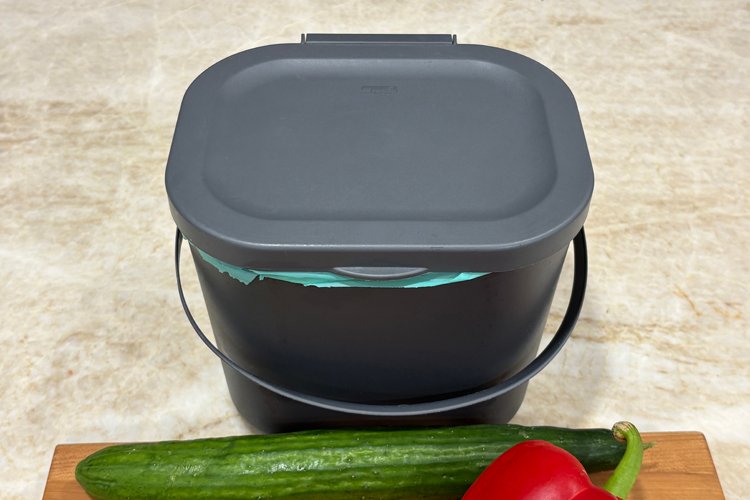
What we added here in France were two additional elements: a pull-out container under the sink dedicated to glass recycling, and a small compost caddy for collecting food scraps before taking them outside to our composter.
What Goes in the Tri-Sort Recycling Bin in France
France has made a big effort in recent years to simplify recycling rules. The national message is “Tous les emballages se trient” (All packaging can be sorted.) This guidance is promoted by ADEME, which leads environmental policy and public education nationwide.
Typically accepted in the tri-sort bin:
- Plastic bottles and containers
- Metal cans and tins
- Paper and cardboard
- Food packaging (even mixed materials, depending on region)
How to Check What Goes in the Tri-Sort Bin
If you’re ever unsure whether something belongs in the tri-sort recycling bin, the most reliable reference is the Guide du tri created by Citeo, the national organization responsible for household packaging recycling in France.
You can search for an item by name—or scan it using their app—and the guide will tell you exactly how it should be sorted based on local rules.
Recycling Drop-Off Points Throughout Town
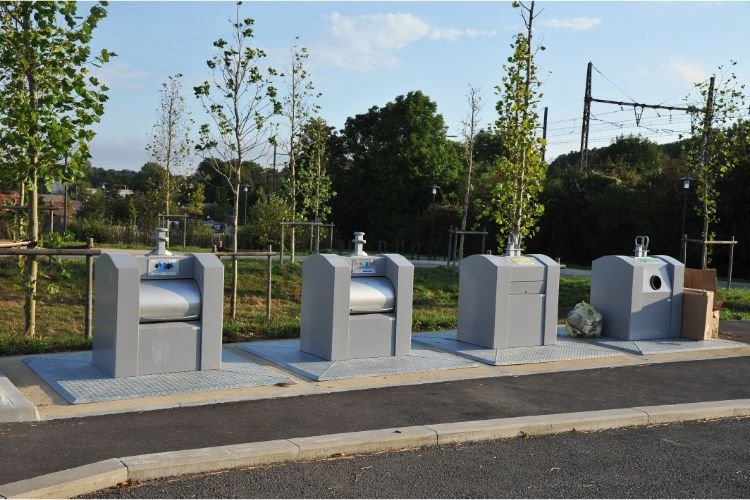
Beyond household bins, French towns are dotted with waste and recycling drop-off points, often called points d’apport volontaire. Many of these containers are underground, odor-controlled, and designed to blend into public spaces. You’ll find them even in small towns and villages, making recycling visible and convenient wherever you live.
Specialized Drop-Offs You’ll See Around Town
These communal points often include options for:
- Large cardboard boxes
- Paper
- Glass
- Textiles
Grocery Stores as Recycling Hubs
One detail that still impresses me is how many grocery stores in France double as recycling centers. Many supermarkets provide collection bins for batteries, light bulbs, small electronics, ink cartridges, and other items.
Recycling here doesn’t stop at your front door—it’s integrated into everyday errands.
Déchetteries: Where to Take Yard and Large Household Waste
In addition to neighborhood recycling points, French residents also have access to déchetteries—municipal waste and recycling centers designed for items that don’t belong in household bins. These facilities accept things like yard waste, large cardboard, bulky household items, old furniture, and certain types of hazardous waste. Access is typically free for residents and organized by the local commune, making it easy to dispose of larger or seasonal waste responsibly rather than sending it to landfill.
Retail Take-Back Programs for Appliances, Electronics, and Furniture
Another way France goes the extra mile on waste reduction is through retail take-back programs. When purchasing a new appliance, electronic device, or even certain furniture items, retailers are generally required to accept the old equivalent for proper recycling or disposal. Whether through delivery services or in-store drop-off, this system ensures bulky or complex items are handled responsibly rather than ending up in landfill.
Composting in France: Actively Encouraged Nationwide
Composting in France has moved well beyond a niche eco-habit. Food-waste separation is now required nationwide, and communes are obligated to provide residents with a solution. Depending on where you live, this may take the form of home composting, shared neighborhood compost bins, or a municipal food-waste collection system.
To support these efforts, many communes actively encourage composting by offering free composters or heavily discounted ones—often at 50 to 70 percent off. In many cases, the only requirement is attending a short informational class or registering through your local mairie or waste authority. These programs are frequently supported or promoted through ADEME as part of France’s broader waste-reduction strategy.
What You Can (and Can’t) Compost
Commonly composted:
- Fruit and vegetable scraps
- Coffee grounds and filters
- Eggshells
- Tea bags (paper)
- Garden waste
Usually not composted at home:
- Meat or fish
- Dairy products
- Oily or heavily cooked foods
These are general guidelines, but rules may vary, so it’s best to check with your local commune to be sure.
How I Compost at Home
I collect our food scraps in our mini compost bin, lined with a compostable bag. When it’s full, we empty it into the outdoor composter. It’s a practical option that fits everyday life—especially if you cook regularly.
I opted for a rotating compost bin, which makes composting faster and far less effort-intensive. Turning the compost takes only seconds, decomposition happens more quickly, and odors and pests are easier to manage. My composter has two separate chambers, allowing one side to finish breaking down while a new batch is started in the other.
It’s important to maintain a balance of roughly two to three parts “brown” materials—such as dried leaves, shredded paper or cardboard, and non-greasy paper towels or napkins—to one part “green” materials, including fruit and vegetable scraps, coffee grounds, and fresh yard waste. I often shred and compost paper trash instead of putting it in the recycling bin, as it helps me keep the right balance and prevents the compost from becoming too wet or compacted.
Beyond reducing waste, composting also produces rich, high-quality compost. We use ours around plants in the garden to add nutrients and as a natural mulch, helping retain moisture and improve the soil over time.
Why Recycling in France Actually Works
Recycling in France succeeds not because people are more virtuous, but because the system removes friction.
- Infrastructure makes sorting easy
- Recycling is visible everywhere
- Composting is supported, not shamed
- Good habits are designed into daily life
Living in France taught me that sustainability isn’t about being perfect—it’s about having systems that make the right choice the easy one.