Provençal Santons: The History and Tradition of France’s Christmas Figurines
What Are Provençal Santons?
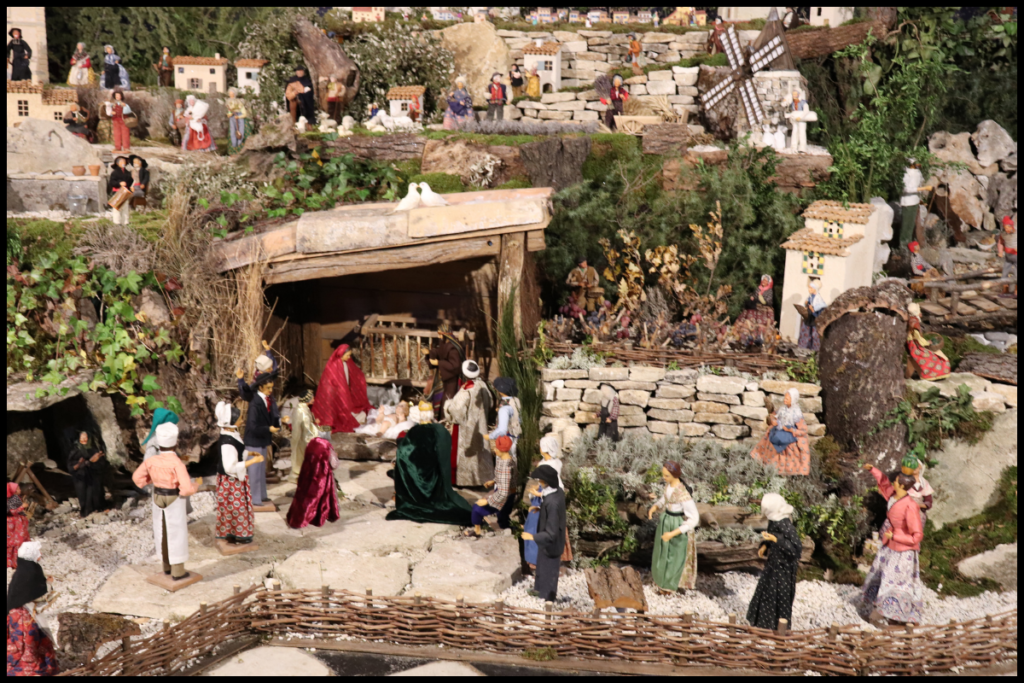
If you spend Christmas in Provence, you’ll quickly notice that nativity scenes look a little different here. Alongside Mary, Joseph, and the baby Jesus, you’ll find bakers, fishermen, shepherds, and villagers dressed in traditional Provençal clothing. These small hand-painted clay figurines are called santons, and they are at the heart of Provençal Christmas traditions.
The word santon comes from the Provençal language (santoun), meaning “little saint.” But despite the name, santons represent far more than religious figures alone. They tell the story of an entire region—its people, its trades, and its way of life—gathered together to celebrate Christmas.
he Origins of Santons in Provence
Santons date back to the time of the French Revolution, when public religious displays were discouraged and churches were often closed. Families began creating their own nativity scenes at home, using simple clay figures made by local artisans. Over time, these humble figurines evolved into a cherished folk art.
What makes santons unique is how quickly they expanded beyond biblical figures. Artisans began adding villagers inspired by everyday Provençal life: the shepherd returning from the hills, the woman carrying laundry, the fisherman with his net. The nativity scene became not just a religious tableau, but a reflection of the surrounding countryside and community.
What Makes a Crèche Provençale Different
A traditional Provençal nativity scene, known as a crèche Provençale, is less about strict historical accuracy and more about symbolism. In Provence, the idea is that everyone comes to welcome the Christ child.
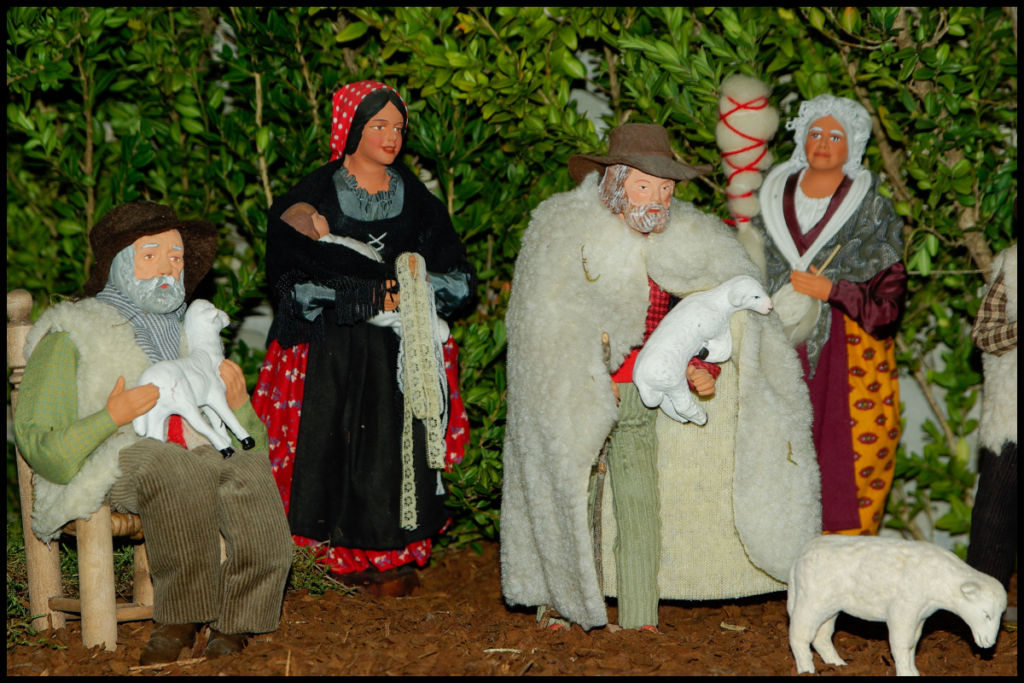
Mary, Joseph, and Jesus remain central, but they are joined by villagers from all walks of life. These figures aren’t random; they represent generosity, humility, labor, and joy. The message is simple and deeply Provençal: faith and daily life are intertwined.
One of the most beloved figures is le Ravi (the delighted one) a joyful villager with raised arms. He represents pure happiness and wonder—someone who may have little materially, but who greets the miracle of Christmas with open-hearted joy.
Santons as a Reflection of Provençal Life
What makes santons so special is how closely they mirror real life in Provence. Many figures are modeled after traditional rural professions that once shaped the region. You’ll often see santons representing:
- Shepherds from the hills
- Bakers carrying loaves of bread
- Fishermen from the Mediterranean coast
- Farmers with olives, lavender, or wheat
These figures quietly preserve a way of life that is slowly disappearing. In this sense, santons are more than decorations—they are miniature storytellers, capturing the history of Provençal life across generations.
How Santons Are Made
Traditional santons are made from clay, molded by hand, fired, and then carefully painted. Even today, many artisans follow techniques that haven’t changed for centuries. The process is meticulous, and the charm lies in the subtle variations—no two santons are exactly alike.
Sizes matter as well. A typical crèche uses different figure heights to create perspective, with smaller santons placed farther back in the scene. Collectors often build their nativity gradually, adding new figures year after year.
A Living Tradition, Passed Down Through Families
Unlike many holiday decorations, santons are rarely replaced. Instead, they are passed down. Families carefully unwrap them each December, often remembering who bought which figure and when. It’s common to add one or two new santons each year, slowly expanding the scene. This tradition makes santons deeply personal. Over time, a crèche becomes a family archive—part memory, part art collection, part holiday ritual.
Where to See or Buy Santons in Provence
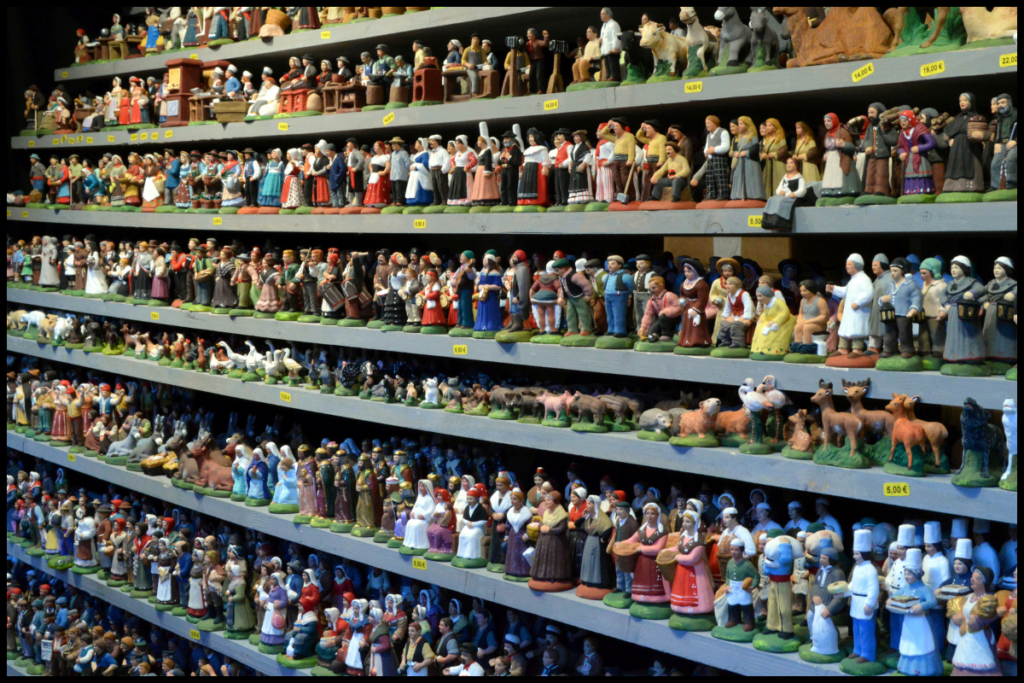
You don’t have to wait for Christmas to discover santons. Many workshops and boutiques in Provence sell them year-round, and some towns even have museums dedicated to the craft. Whether you’re browsing a small artisan studio or a bustling Christmas market, it quickly becomes clear that santons are treated with respect and pride. When shopping, handmade santons will usually be more detailed and slightly imperfect—qualities that are considered a mark of authenticity rather than a flaw.
More Than Figurines
Christmas in Provence is as much about community as it is about the nativity. Through santons, everyday life and everyday people are invited into the scene. In this way, the nativity is brought to life in a timeless way that illustrates the importance of the region’s beliefs, traditions, and celebrations.
Explore More French Christmas Traditions
From Provençal santons to a mug of vin chaud enjoyed on a cold evening, Christmas in France is shaped by regional traditions. The Christmas markets of Alsace offer a wonderful contrast to Provence, with their own atmosphere, flavors, and customs.