Mont d’Or Cheese: France’s Most Decadent Winter Cheese
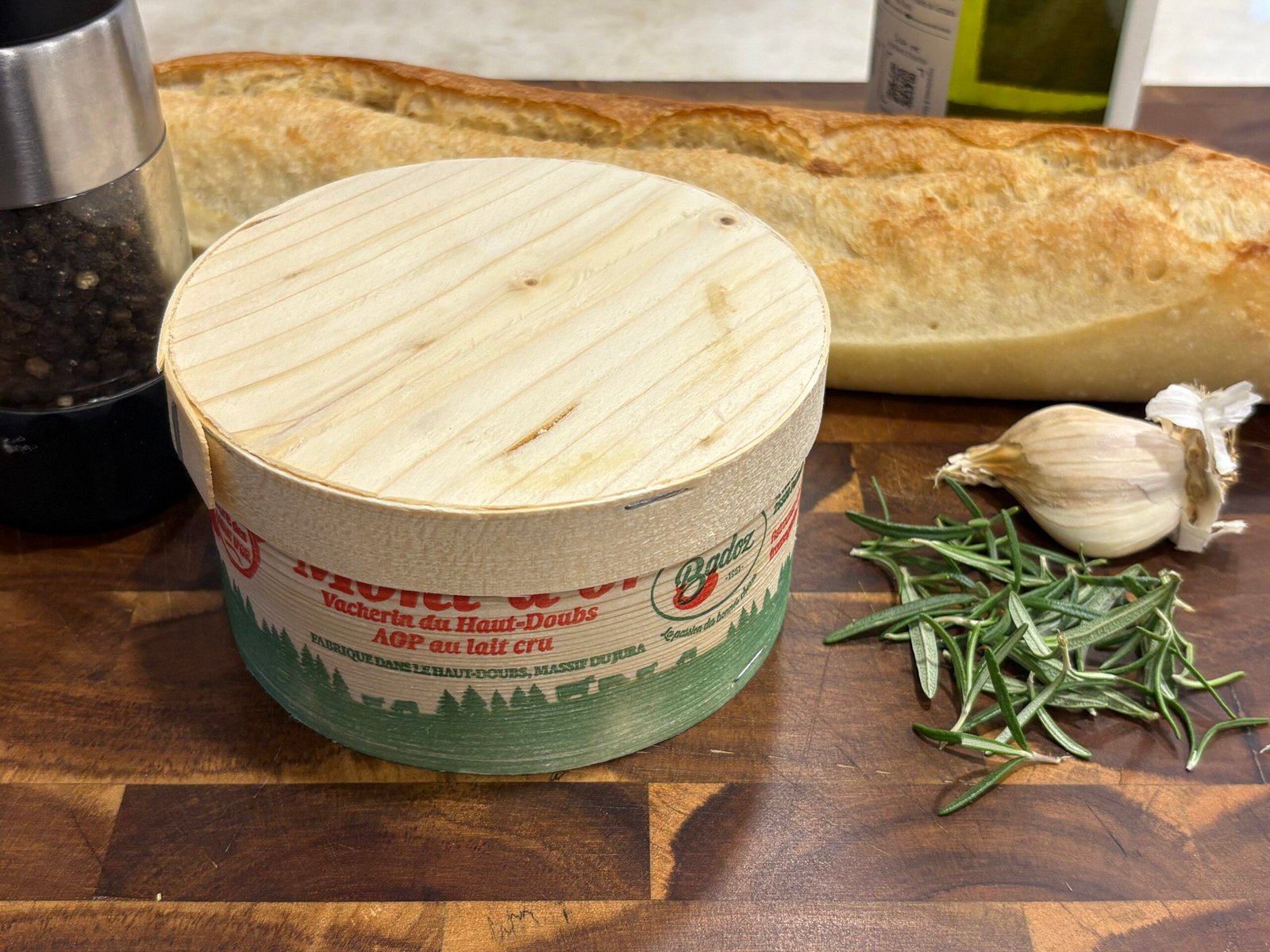
If you’ve ever noticed a small, round cheese tucked inside a wooden box at a French fromagerie, there’s a good chance it was Mont d’Or cheese. Sumptuous and famously spoonable, Mont d’Or is one of France’s most indulgent seasonal cheeses and a classic fixture of winter tables.
Available only part of the year, Mont d’Or is known for its ultra-creamy texture, subtle woodsy aroma, and versatility. It can be eaten gently softened at room temperature or baked until bubbly and served straight from its box. True to its name, which means “Mountain of Gold,” Mont d’Or is a seasonal splurge. It’s richer, rarer, and more expensive than most everyday soft cheeses — a winter indulgence meant to be sought out and savored.
What Is Mont d’Or Cheese?
Mont d’Or is a soft, washed-rind cow’s milk cheese with a pale, creamy interior that softens as it ripens. It is traditionally wrapped in a band of spruce bark and sold in a round spruce wood box, which helps the cheese keep its shape while also influencing its aroma and flavor.
Unlike many soft cheeses that are sliced, Mont d’Or is often scooped or spread. When warmed, it transforms into a silky, molten cheese that’s closer to a fondue than a wheel of cheese.
Where Does Mont d’Or Cheese Come From?
Mont d’Or comes from the Jura Mountains, near the French–Swiss border, and is named after a mountain in that region. The area’s cold winters and mountainous terrain shaped both the cheese itself and the traditions surrounding it.
Mont d’Or AOP and Protected Origins
Mont d’Or has AOP (Appellation d’Origine Protégée) status, which means its production is strictly regulated. Only milk from approved local farms can be used, and the cheese must be produced and matured within a defined geographic area. The spruce bark and wooden box are not optional details but part of the protected method.
French Mont d’Or vs Swiss Vacherin Mont d’Or
Across the border in Switzerland, a very similar cheese is sold under the name Vacherin Mont d’Or. While the two cheeses share many characteristics, they are protected separately and follow slightly different production rules. Both are seasonal, rich, and traditionally enjoyed warm.
Why Is Mont d’Or Cheese Only Available in Winter?
Mont d’Or is produced seasonally, usually from September through March. This timing reflects traditional farming cycles in the Jura region, where cows produce less milk during colder months.
Rather than making large hard cheeses that require more milk and longer aging, producers historically turned to soft cheeses like Mont d’Or, which could be made with smaller quantities of winter milk and enjoyed relatively quickly. Today, that seasonality remains part of Mont d’Or’s identity.
What Does Mont d’Or Cheese Taste Like?
Mont d’Or has a mild yet deeply comforting flavor. The interior is buttery and creamy, with subtle earthy notes and a faint alpine aroma. While the rind can be aromatic, the cheese is gentle and rounded rather than sharp, with a depth that builds slowly rather than hitting all at once.
How Is Mont d’Or Different from Brie or Camembert?
While Mont d’Or is often compared to Brie or Camembert, the difference is immediately noticeable once you taste it. Brie and Camembert develop their flavor primarily through surface ripening, which gives them pronounced mushroomy, earthy notes and a firmer structure that can be sliced.
Perhaps most importantly, Mont d’Or is commonly eaten warm and shared straight from the box, giving it a more communal, comfort-food feel than most soft cheeses. When warmed, the difference becomes even more pronounced. Brie and Camembert soften but retain their shape, while Mont d’Or turns fluid and silky.
How to Eat Mont d’Or Cheese (The French Way)
At room temperature, Mont d’Or is often served as part of a cheese course. Rather than slicing it, people scoop the soft cheese onto crusty bread, allowing its natural creaminess to shine.
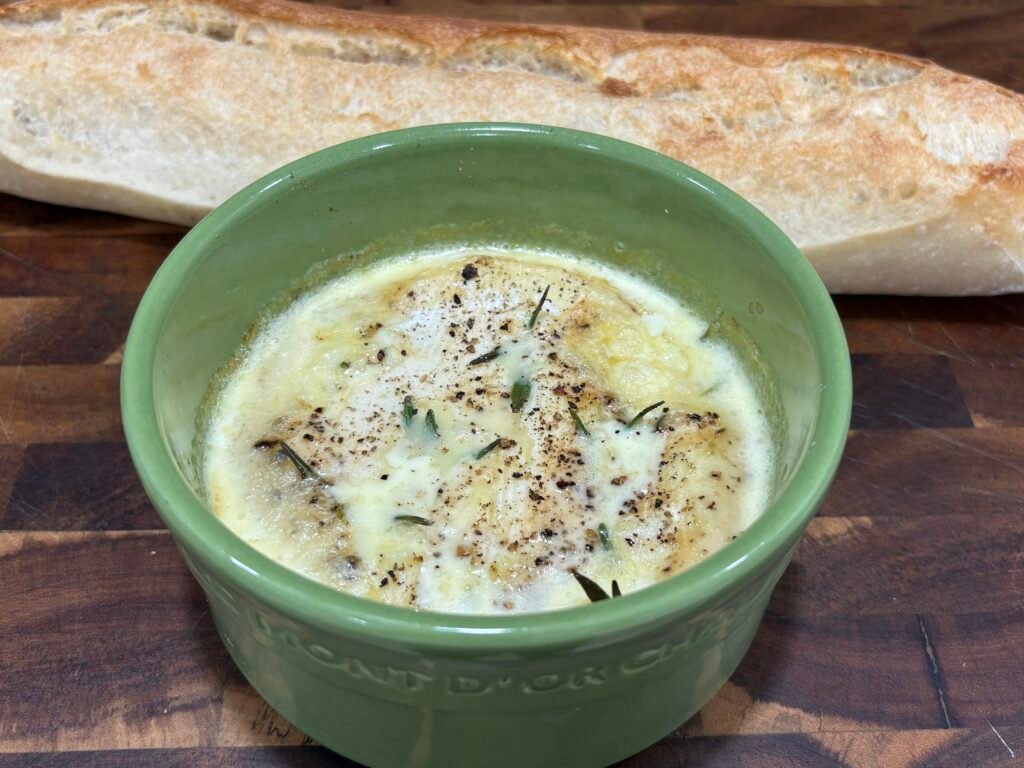
The most iconic preparation, however, is baked Mont d’Or. The cheese is gently heated in its wooden box until it’s warm and melted. Some people add a splash of white wine, garlic, and herbs, but others prefer to let the cheese speak for itself.
Mont d’Or is typically served with simple accompaniments such as boiled potatoes, charcuterie, and pickles. These balance the richness without distracting from the cheese.
How to Bake Mont d’Or Cheese
To bake Mont d’Or, the cheese is left in its wooden box with any plastic removed (or placed in a crock) and baked in the oven at 180°C (350°F). After about 20 to 25 minutes, the interior becomes fully melted and ready to serve.
It is best eaten immediately, while hot and fluid, spooned over potatoes or spread onto bread. This method is especially popular for casual winter meals and small gatherings.
What Wine Goes with Mont d’Or Cheese?
Because Mont d’Or is rich but not sharp, it pairs best with wines that are fresh and not overly tannic. Dry white wines are the classic choice, particularly those from eastern France. Light-bodied red wines can also work, as long as they are low in tannins and not heavily oaked.
The goal is to complement the cheese’s creaminess rather than compete with it.
Where to Buy Mont d’Or Cheese in France (and Abroad)
In France, Mont d’Or is widely available during the winter months at fromageries, local markets, and most supermarkets. Outside France, it can be more difficult to find due to its seasonal production and limited export, though some specialty cheese shops carry it briefly in winter.
Dubbed the “holy grail of soft cheeses,” this “mountain of gold” is a winter treasure worth seeking.