Do They Celebrate Halloween in France?
Although Halloween is more low-key in France than it is in some other countries, it is steadily growing in popularity. While the United States has embraced the holiday in the splashiest way, the origins of Halloween actually trace back to Europe, with roots in ancient Celtic traditions.
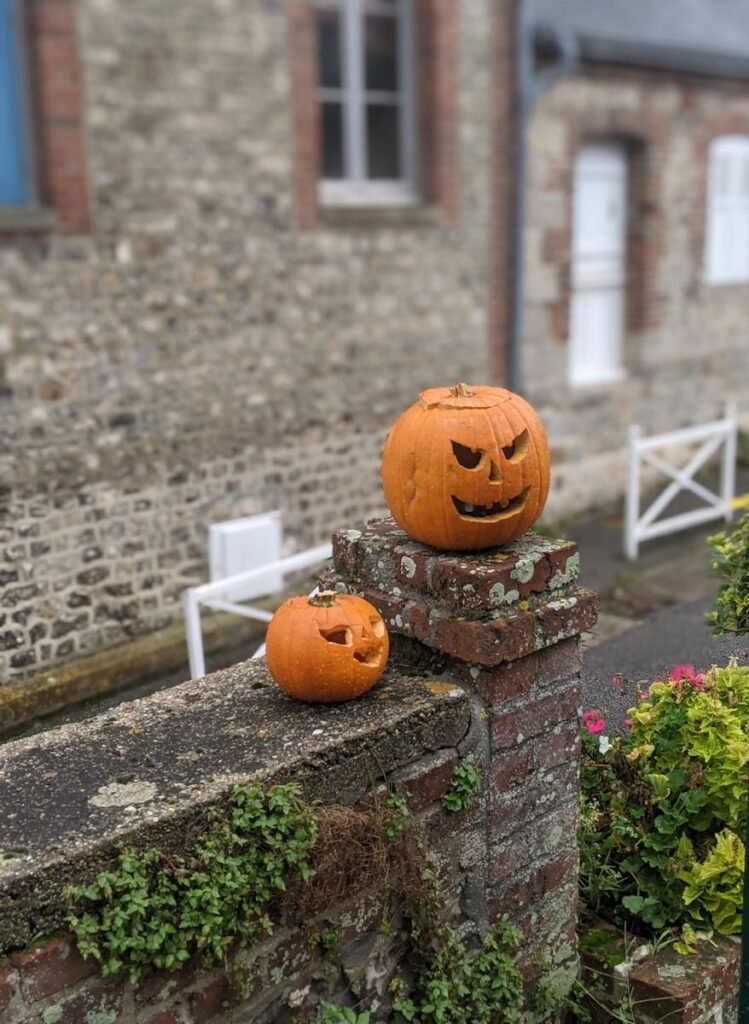
In France, Halloween is not a deeply ingrained tradition for most families. Most parents didn’t grow up going trick-or-treating. That said, children do dress up and collect candy, and there are an increasing number of organized events for adults as well. Many towns and municipalities now get in on the action, often hosting an afternoon of Halloween-themed activities designed to appeal to all ages.
Do Children Go Trick-or-Treating in France?
Yes — but it looks a little different than in the U.S.
Instead of saying “trick or treat,” French children usually say, “Des bonbons ou un sort!”, which translates to “candy or a spell.” Some children can be a bit shy and unsure about saying it, but, being French children, they tend to be unfailingly polite.
One of the biggest surprises for American families is how children collect their candy. Rather than the giant plastic pumpkins, oversized bags (or even pillowcases) commonly used in the U.S., most French children carry smaller bags or modest Halloween buckets, and a few simply use their pockets.
Children also start their rounds earlier than American kids, typically around 3:30 p.m., often right after school. Trick-or-treating usually wraps up by 8:30 p.m., making it very much an early-evening activity.
Not every home participates, and much like in the U.S. children look for cues such as lights being on or the presence of a jack-o’-lantern. That said, far fewer homes decorate their exteriors. As with many holidays, French people tend to eschew heavy commercialization and overconsumption. For families who do participate, Halloween often feels more like a neighborhood stroll than a high-energy event. Children tend to move in small groups, usually accompanied by parents, chatting as they go and stopping to greet neighbors they already know. There’s less urgency to “hit every house” and more emphasis on enjoying the moment. In many areas, it’s also common to see children visiting only a handful of nearby homes before heading back, reinforcing the sense that Halloween in France is about connection rather than quantity.
What Kind of Candy Do French Children Get for halloween?
When it comes to treats, French children generally collect more sugary sweets rather than chocolate. Unlike in the US, where small candy bars dominate Halloween bowls, chewy candies, gummies, lollipops, and other classic French bonbons often make up the bulk of what kids bring home. Kids seemed pleasantly surprised to receive the candy bars that we distributed. (Read more about the differences in French candy bars in this post.)
Do French Children Dress Up in Costumes?
Absolutely — costumes are very much part of the experience. But it is much more common to see classic choices like ghosts, witches, vampires, princesses, and the like. You are less likely to see trendy pop culture costumes. Some towns host costume contests and face painting as part of their events. Bars and clubs often celebrate with costumed events for the grown-ups.
A holiday finding its place
While Halloween may still feel understated compared to other countries, it is clearly gaining momentum. When I first moved here, we had barely a dozen trick-or-treaters; just three years later, that number has grown to more than seventy. It’s a small but telling sign that Halloween is slowly finding its place in France — perhaps unsurprising for a holiday rooted in community.
Overall, Halloween in France feels less about spectacle and more about simple, communal fun, reflecting how the French tend to approach many celebrations.