
The Secret Behind France’s Surprisingly Mild Weather (Despite Its Latitude)
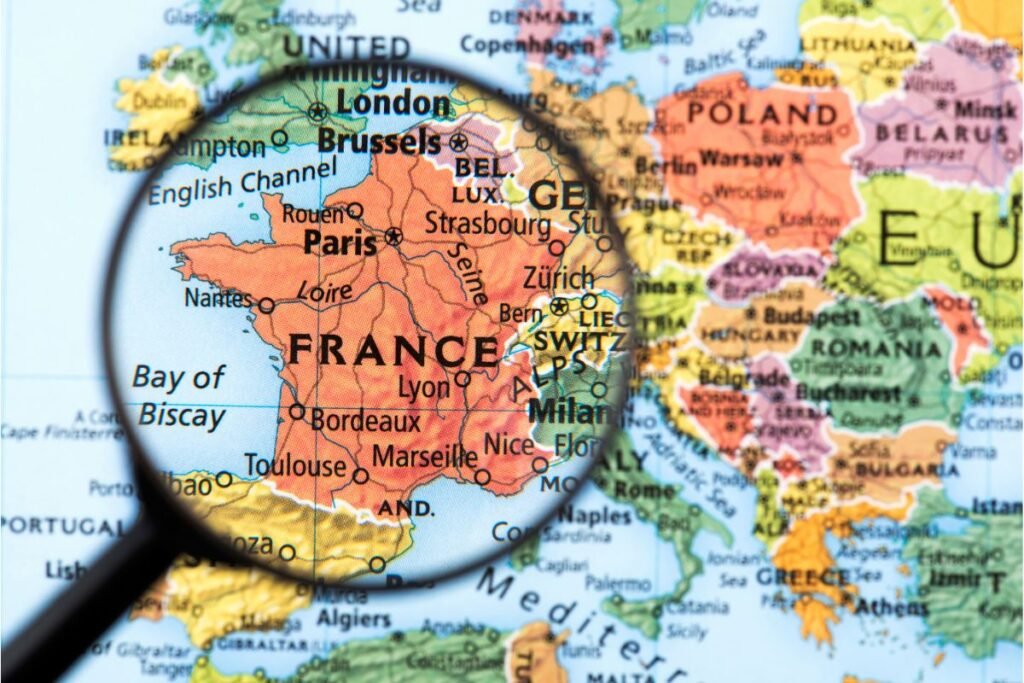
If you look at a map, France doesn’t seem like it should feel especially warm. In fact, parts of the country sit at the same latitude as places that others associate with long, cold winters. And yet, France—especially much of Western and Southern France—enjoys mild winters, moderate summers, and far fewer weather extremes than many places at the same latitude around the world. So what’s going on?

The answer lies not in latitude alone, but in a unique combination of ocean currents, winds, and geography that work together to keep France surprisingly comfortable year-round.
France’s Latitude: Appears Colder on the Map Than in Real Life
Latitude measures how far north or south a place is from the equator, and in theory, places at the same latitude should have similar climates. That’s where France starts to surprise people.
Paris sits at about the same latitude as International Falls, a town right along the Minnesota–Canada border known for its brutal winters. While International Falls regularly experiences extended periods of deep cold, heavy snowfall, and Arctic air outbreaks, Paris has relatively mild winters, with temperatures often hovering above freezing and snow that is usually light and short-lived.
Saint-Tropez, on the Côte d’Azur, sits at nearly the same latitude as Madison, Wisconsin. On paper, one might assume that these two places should experience similar climates—but in reality, they couldn’t feel more different. Madison has long, cold winters with regular snowfall and sharp temperature swings. Saint-Tropez, by contrast, enjoys a mild Mediterranean climate shaped by the nearby sea, with palm trees, sunny winters, and rare frost. The average high in the coldest month of January is around 55°F.
Clearly, latitude alone doesn’t tell the full story.
The Gulf Stream: France’s Natural Heating System
One of the biggest reasons France stays warmer than other places at the same latitude is the Gulf Stream and its continuation, the North Atlantic Drift. This powerful system of ocean currents carries warm water from the tropics across the Atlantic toward Western Europe.
As this warm water releases heat into the atmosphere, it raises air temperatures over much of Europe—including France. By the time winter arrives, that extra warmth makes a noticeable difference, especially compared to places in North America that don’t benefit from a similar oceanic “heat conveyor belt.”
Why Western Europe Is Milder Than North America
Another key factor is prevailing wind patterns. In much of Europe, winds generally blow from west to east, meaning France is constantly receiving air that has traveled over the relatively warm Atlantic Ocean. This ocean-moderated air helps prevent extreme cold snaps.
In contrast, North America often experiences north–south airflow, allowing Arctic air to plunge deep into the United States. That’s why places at the same latitude as France—especially inland areas—can see far colder winters and more dramatic temperature swings.
Geography Matters: Mountains, Seas, and Natural Barriers
France’s physical geography also plays an important role. Mountain ranges like the Alps and the Pyrenees help block cold continental air from sweeping across the country. Meanwhile, the Atlantic Ocean and the Mediterranean Sea act as massive temperature stabilizers, keeping winters milder and summers less extreme than in inland climates.
The result is a patchwork of microclimates—but overall, a country that feels far gentler than its latitude suggests.
Does It Snow in France?
Yes, it does snow in France—but how much depends heavily on where you are.
- Northern and central France, including Paris, may see snow once or twice a year, usually light and short-lived.
- Western France tends to have mild, wet winters. Snow is uncommon here and typically brief.
- Eastern France is generally colder and snowier due to continental influences and reduced ocean moderation.
- The French Alps and Pyrenees receive heavy snowfall and are home to world-class ski resorts.
- Southern France, especially along the Mediterranean coast, rarely sees snow at all.
After three years here, I finally experienced snow in southern France—a rare event that happens only once every five to ten years. It was just a light mix of snow and sleet, melting almost as soon as it touched the ground, making it more of a novelty for locals than anything else—aside from a brief dose of early-morning chaos on some of the roads.
The Sunniest Spots in France
When it comes to sunshine, the Côte d’Azur stands out as the brightest region in France. Along this Mediterranean coastline, also known as the French Riviera, residents enjoy around 300 sunny days per year. Menton, located near the Italian border, is often considered the warmest year-round spot in mainland France, with winter temperatures that rarely dip low enough to threaten the citrus trees for which the town is famous.
This area benefits from a classic Mediterranean climate: clear skies, low humidity, and far fewer gray winter days than northern France or much of Western Europe. Overall, the Côte d’Azur stands out not just for warmth, but for consistent, reliable sunshine—setting the perfect stage for outdoor cafés, seaside walks, and the kind of daily light that surprises many newcomers.
I knew our area in southern France would be sunny—it was one of the top items on our wishlist before moving here—but I was still surprised to discover that it actually has even more sunny days than our previous location in southern Florida, by a full month. As a sun-lover, I’ll happily take them all.
Final Thoughts: Latitude Isn’t the Whole Story
France’s climate is proof that lines on a map don’t tell the whole story. Shaped by the sea, softened by geography, and brightened by abundant sunshine, the country enjoys a balance that few places at the same latitude can match. It’s an understated advantage of living here—and one you come to appreciate more with every sunny winter day.