Cottage cheese, recreated in france
France is a wonderland of cheese. As a cheese lover, I feel incredibly fortunate to live in a country with over 1,200 distinct types of cheese—and even more if you count regional and artisanal variations. Beyond cheese itself, the selection of dairy products is equally impressive. And yet, despite all this abundance, I have been consistently unable to find one very basic standby: cottage cheese.
Cottage cheese is not necessarily at the top of my list when it comes to cheeses. It feels less like a ‘proper’ cheese and more like a practical dairy staple. Yet this unassuming, mild fresh cheese has its virtues. It’s a great source of lean protein and an easy, go-with-anything addition to breakfast or lunch.
What Is Cottage Cheese?
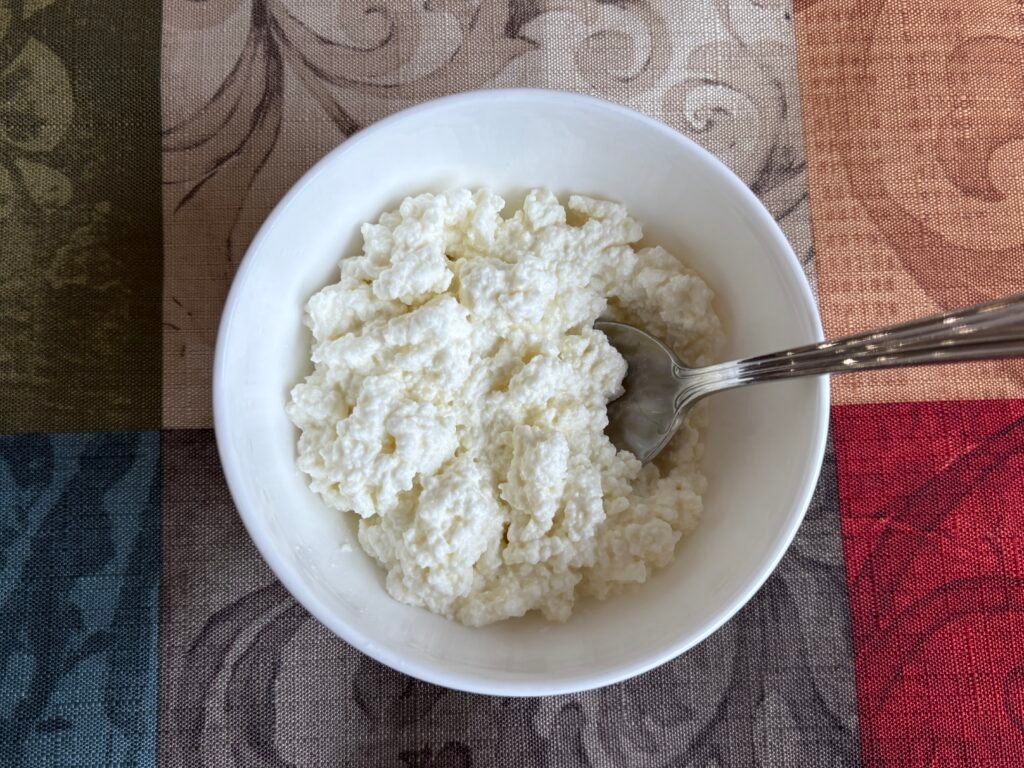
Cottage cheese is a fresh, unripened cheese made by curdling milk with an acid, then draining and gently rinsing the curds. Unlike aged cheeses, it isn’t pressed or matured. The result is a mild, lightly tangy cheese with soft, separate curds.
After draining, the curds are typically mixed with a small amount of milk or cream, which gives cottage cheese its characteristic creamy texture. Because much of the whey is removed during this process, cottage cheese ends up lower in fat than most cheeses and is valued more for its high protein content than for richness or complexity.
Simple, practical, and intentionally understated, cottage cheese is designed to be eaten fresh—often on its own or as an easy addition to everyday meals rather than as a centerpiece cheese.
Why Cottage Cheese Is Hard to Find in France
Despite France’s extraordinary dairy culture, cottage cheese simply isn’t part of everyday French eating habits.
Instead, French supermarkets are rich in other fresh cheeses, each serving a slightly different purpose:
Fromage blanc – Smooth, creamy, and yogurt-like, fromage blanc is closer to a cultured dairy product than a curd-based cheese. It works well in both sweet and savory dishes but lacks the distinct curds that define cottage cheese.
Faisselle – A fresh cheese drained in a small basket, faisselle is wetter and more tangy, with a looser structure. Although it’s sometimes compared to cottage cheese, it’s usually eaten sweetened or as a dessert rather than as a savory protein staple.
Petit Suisse – Rich, smooth, and creamy, petit suisse is closer to a fresh cream cheese than to cottage cheese. It’s typically enjoyed as a dessert or snack and is far higher in fat, making it very different in both texture and use.
Ricotta – Unlike cottage cheese, ricotta is usually easy to find in France. While it’s also a fresh cheese, ricotta is smoother and more cohesive, with a slightly sweet, milky flavor. It works well in cooking, but its texture and taste are quite different from cottage cheese.
These cheeses reflect a different culinary approach. In France, fresh cheeses are generally valued for their creaminess or acidity, rather than for their role as a neutral, high-protein base.
My Solution: Homemade Cottage Cheese
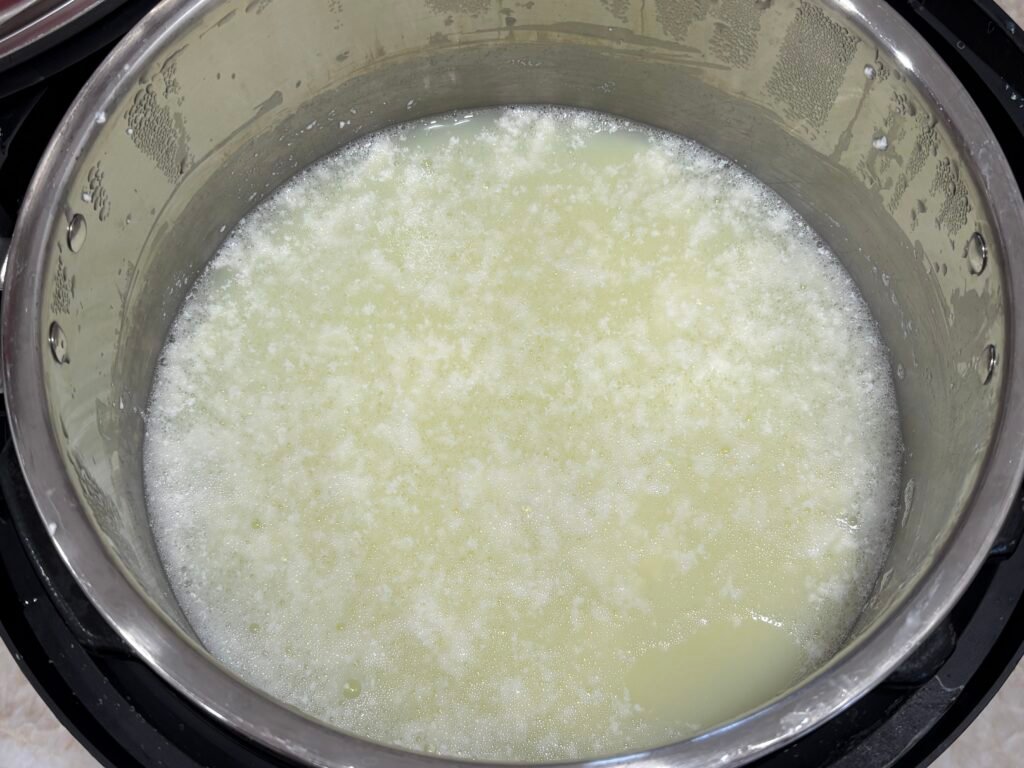
After realizing after a few years that I miss the occasional bowl of cottage cheese, I decided to try to make my own. Cottage cheese is a fresh cheese at heart, and that means starting with regular fresh milk, not UHT (most common in France). Ultra-high-temperature milk doesn’t form curds as reliably, while fresh milk curdles cleanly and produces a better texture.
To curdle the milk, I use a mix of lemon juice and vinegar. Lemon juice gives a cleaner, more pleasant flavor, while vinegar provides reliable acidity. You can use all of one or the other if you prefer, but I’ve found the combination produces the most consistent results with the best taste.
I used my pressure pot for convenience, since the yogurt setting (pasteurize mode) gets it to the ideal temperature, but you can heat it on the stovetop instead.
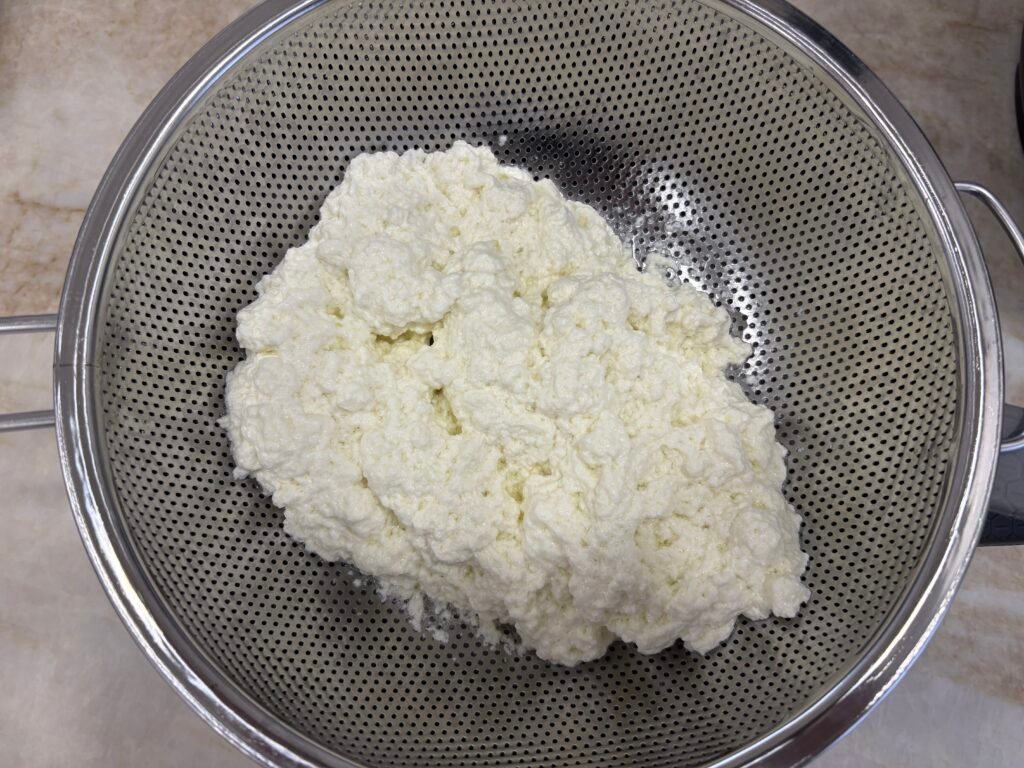
When I first started, I followed the common advice to rinse the curds after draining. While this does create a very mild cheese, I found the end result too bland for my taste. Now I simply strain the curds without rinsing, which preserves more flavor while still keeping the cheese fresh and light.
This recipe works with skim (écrémé), semi-skim (demi-écrémé), or whole (entier) milk. Higher fat milk produces better curds than fat-free. One batch yields about three cups of cottage cheese, roughly the equivalent of a large tub from the store.
To finish, the curds are typically salted and dressed with milk or cream—whatever suits your taste. I like to let the cottage cheese sit for a bit after dressing it, then taste again, as the curds absorb the liquid and the flavor softens and rounds out.
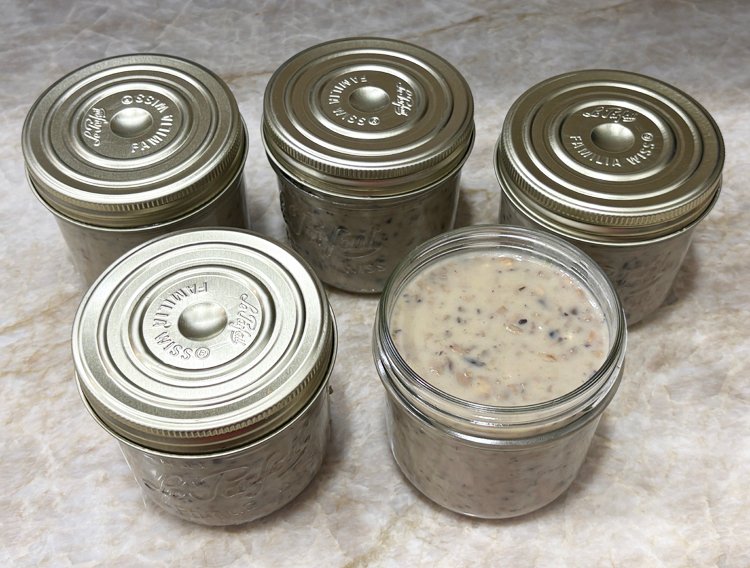
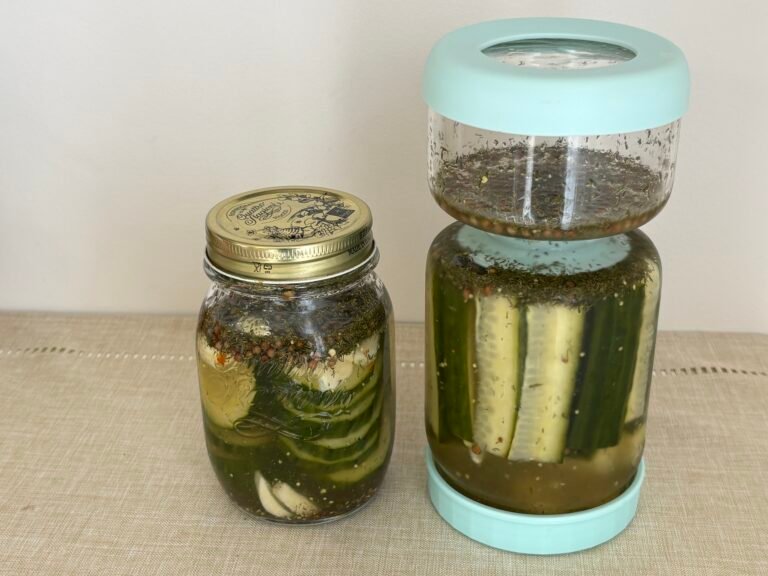
If you’d like to read about some of my other adventures recreating simple foods I once took for granted, you can find my post on homemade condensed cream of mushroom soup here and I will soon add another on making dill pickles.

Cottage Cheese
Ingredients
Cottage Cheese Curds
- 3 liters milk (fresh, not UHT shelf-stable) semi-skim (demi-écrémé), or whole (entier) is best
- 3 Tbsp lemon juice, fresh
- 1 Tbsp white vinegar
Dressing
- 1/2-3/4 tsp salt to taste
- 1/2 cup milk or cream You may use more or less based on your preferences
Instructions
- Heat the milk in a pressure cooker (using the yogurt pasteurize/boil setting) or on the stovetop, whisking occasionally, until it reaches 183–185°F (84–85°C) on a food thermometer.
- Whisk in the lemon juice and vinegar. If the milk begins to curdle within a few minutes—you’ll see the yellow whey separating from the curds—turn off the heat and let it sit for 30 minutes to fully curdle. (If it doesn’t seem to be curdling much within a few minutes, continue heating for a few more minutes, then remove from heat and let it rest.)
- Using a fine-mesh strainer, drain the curds. You can also line a regular strainer with cheesecloth. (The whey can be reserved and used in place of buttermilk in other recipes.)
- If desired, briefly rinse the curds with water. When using a lemon juice–vinegar combination as the curdling acid, I prefer not to rinse, as it helps retain a bit of the tangy whey flavor.
- Dress the curds with salt to taste and your choice of milk or cream, then chill. The flavor will continue to develop as the dressing is absorbed.The cottage cheese will keep for 5–7 days in the refrigerator.