Why the Bûche de Noël Is the Most Beloved French Christmas Dessert
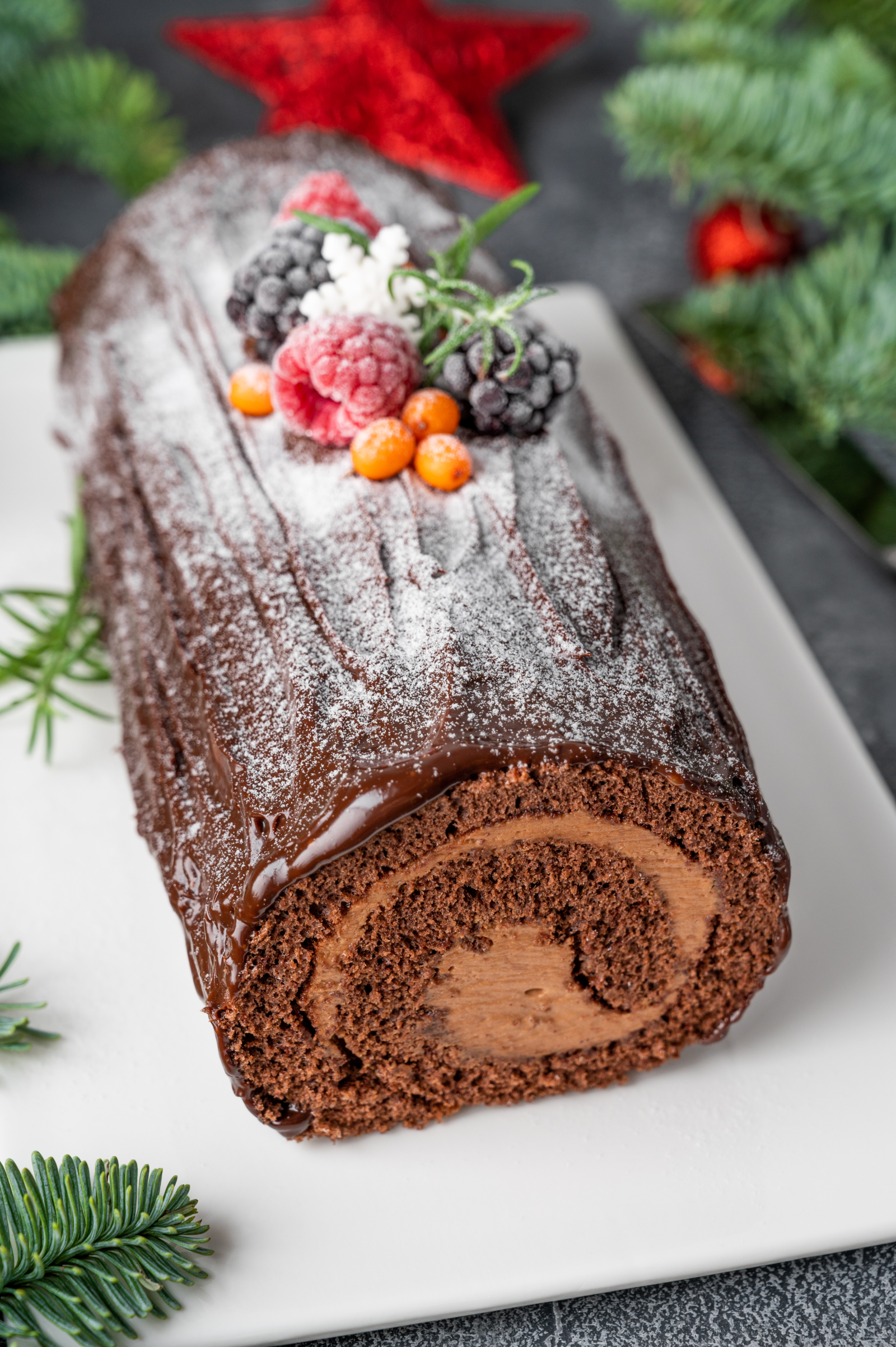
If you spend Christmas in France, you’ll quickly notice that the holiday table looks a little different than it does in the U.S. There may be fewer pies, fewer cookies piled high on platters, and almost certainly no pumpkin spice anything. Instead, the grand finale of the French Christmas meal is almost always the same: la bûche de Noël.
This log-shaped cake is more than just dessert. It’s a Christmas tradition in France that brings together history, symbolism, and French pastry craftsmanship in one unmistakable centerpiece.
What Is a Bûche de Noël?
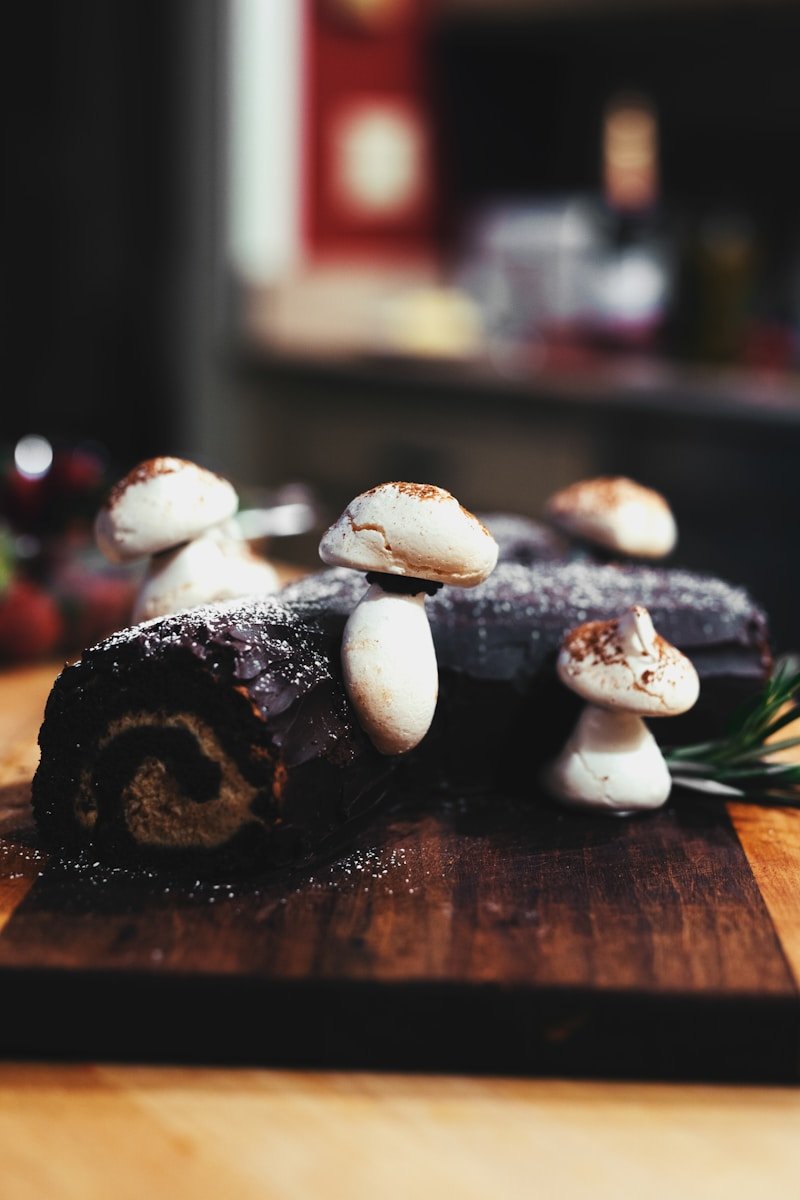
The bûche de Noël, literally translated as “Christmas log,” is a rolled sponge cake filled with cream and decorated to resemble a wooden log. Traditionally, it’s made with chocolate sponge and chocolate buttercream, often finished with textured frosting, powdered sugar “snow,” and delicate decorations like meringue mushrooms or holly leaves. Occasionally, it’s presented as a short, thick stump rather than a long log, designed to resemble a cut tree trunk.
Today, you’ll find countless variations—coffee, praline, black forest, triple chocolate, chestnut, citrus, vanilla, raspberry—but the log-inspired shape remains constant. No matter how modern or inventive the flavor, the visual reference to wood is what defines a true bûche de Noël.
The Origins: From Fire to Fork
The tradition dates back centuries, long before ovens and pâtisserie windows filled French towns. In many parts of Europe, families once celebrated the winter solstice and Christmas by burning a large log—the Yule log—in the hearth. This log symbolized warmth, protection, and good fortune for the year ahead.
As fireplaces disappeared from many homes and large ceremonial logs became impractical, the tradition adapted rather than disappearing. In the late 19th century, French pastry chefs reimagined the Yule log as a dessert—one that could be shared at the table instead of burned in the fire.
The result was the bûche de Noël as we know it today: a symbolic nod to the past, recreated in sugar, cream, and chocolate.
Traditional vs. Modern Bûches
While the classic chocolate bûche remains popular, modern French pastry chefs have expanded the tradition in creative ways.
You’ll now find:
- Light mousse-based bûches instead of buttercream
- Frozen bûches glacées made with ice cream or sorbet
- Minimalist, architectural designs that barely resemble a log at all
- Regional flavors like chestnut (marron), coffee, hazelnut, or citrus
Despite these innovations, most French people still expect a bûche to feel festive and familiar—even when it looks contemporary.
Homemade or Pâtisserie?
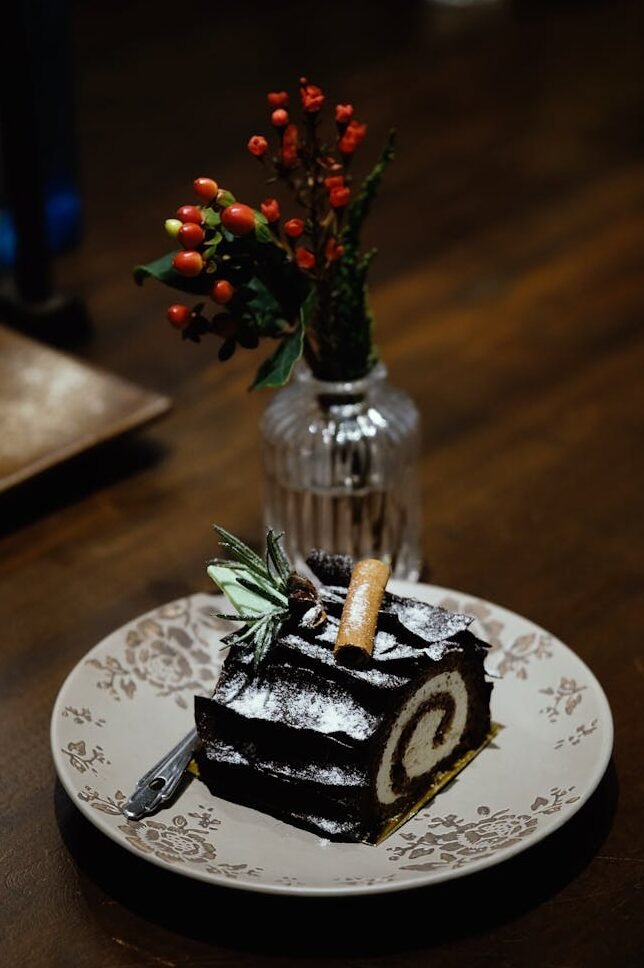
Both options are common in France. Many families order their bûche from a trusted local pâtisserie, where December displays showcase rows of carefully crafted logs like edible art. Grocery stores also offer a large selection of the desserts in various flavors and sizes.
Others prefer to make their own, especially in families where baking is part of the holiday ritual. Homemade bûches range from ornate to simpler in appearance, but they’re no less meaningful. In fact, the act of making one often carries as much significance as serving it.
A Dessert That Tells a Story
What makes the bûche de Noël special isn’t just its taste—it’s what it represents. It connects modern French Christmas celebrations to older winter customs, reflects the importance of shared meals, and highlights the French emphasis on presentation and seasonal food.
The bûche de Noël is just one part of the larger Christmas atmosphere in France, where food, traditions, and regional customs all come together in subtle but meaningful ways. At Christmas markets, the scent of vin chaud fills the air, warming hands and conversations alike, while handcrafted santons appear in homes and shop windows as part of traditional nativity scenes. At special Christmas Markets in Alsace, Christmas takes on an especially storybook quality, with decorated villages, festive meals, and long-standing holiday customs that make the season feel immersive rather than hurried. Together, these traditions help explain why Christmas in France feels less about excess and more about experience—one that unfolds slowly, from the first glass of mulled wine to the final slice of dessert.