The Essential French Cleaning Products Every Home Uses
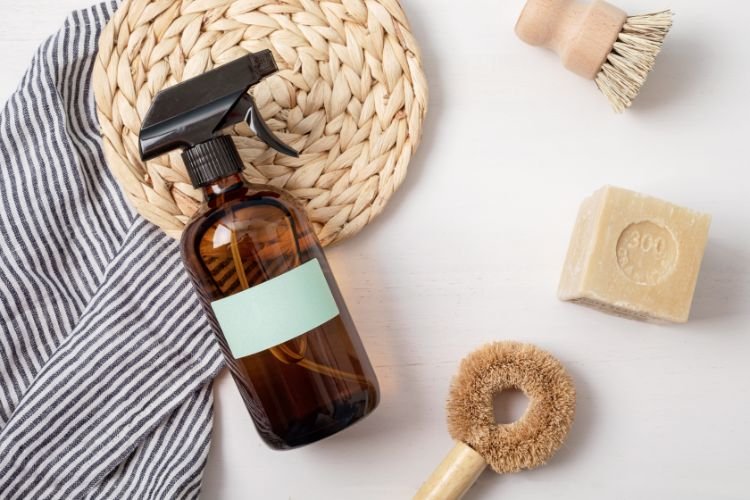
Walk down the cleaning aisle in a French supermarket and you’ll quickly notice a few familiar products appearing again and again: savon de Marseille, savon noir, vinaigre blanc, and bicarbonate de soude.
These traditional staples have been used in French homes for generations and are still widely relied upon today. Rather than using dozens of specialized cleaning sprays, many households use a small set of versatile products that can handle most everyday tasks.
If you’re wondering what these classic French cleaning products actually do—and when to use each one—this guide explains the basics.
Savon de Marseille: The Traditional French Soap
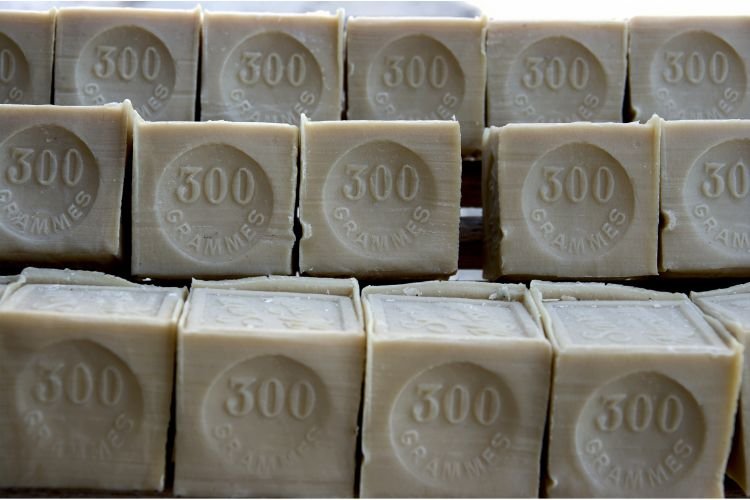
Savon de Marseille (“soap of Marseille”) is one of the oldest and most iconic household products in France. Originally produced in Provence, this hard soap has been made for hundreds of years using vegetable oils such as olive oil. Authentic versions contain very few ingredients and are biodegradable.
When we moved into our French home, the previous owner had left a giant block of this soap by the laundry sink. We were confused why such a huge bar would be needed for hand soap, but later found out that these oversized blocks are typically used for laundry and cleaning.
You’ll find it sold as:
- large green or beige cubes
- marketed for laundry stain treatment
- soap flakes for homemade detergent
What Savon de Marseille is used for
French households use it for a surprising number of tasks:
- treating stains before washing clothes
- hand-washing delicate fabrics
- making homemade laundry detergent
- washing dishes
- general household cleaning
A common trick is simply rubbing the bar directly onto a stain before putting the garment in the washing machine.
Because it’s gentle and versatile, it’s often considered the all-purpose traditional soap of French homes.
Savon Noir: The French All-Purpose Cleaner
Savon noir (“black soap”) is another staple in French cleaning cupboards.
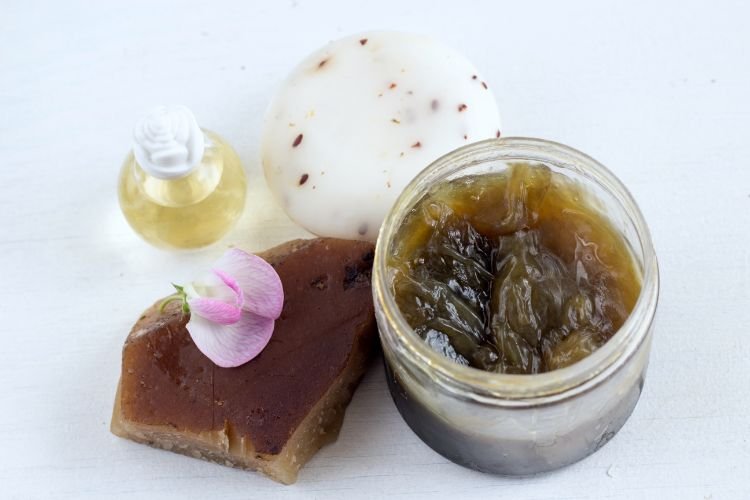
Unlike the solid cube of Marseille soap, savon noir is usually a thick liquid or soft paste made from olive oil or linseed oil.
It’s prized because it’s extremely effective at cutting grease while still being relatively natural.
What Savon Noir Is Used For
Savon noir is commonly used for:
- cleaning kitchen surfaces
- degreasing stovetops
- washing floors
- cleaning bathrooms
- washing windows
- removing stubborn grime
You typically dilute a small amount in warm water to create a multi-purpose cleaning solution.
It’s also popular in gardening, where it can be diluted and sprayed on plants to help control insects.
Vinaigre Blanc: The French Limescale Fighter
White vinegar is everywhere in French supermarkets—and not just in the food aisle.
In France it’s widely sold as vinaigre blanc ménager, or cleaning vinegar.
The reason is simple: much of France has hard water, which leaves limescale deposits on kettles, faucets, coffee machines, and showerheads.
What vinegar is used for
Vinaigre blanc is especially useful for:
- removing limescale from kettles and coffee machines
- cleaning shower glass and faucets
- polishing mirrors and windows
- descaling washing machines and dishwashers
- deodorizing drains
One important thing to know: vinegar works extremely well on mineral deposits, but it’s not very effective at removing grease by itself.
That’s why French households often combine it with soap-based cleaners.
Bicarbonate de Soude: The Gentle Scrubber
Bicarbonate de soude (baking soda) is another common staple in French homes.
It’s valued for its ability to cut through grease while still being relatively natural.
Common uses for baking soda
In French households it’s often used for:
- scrubbing sinks and bathtubs
- removing odors from refrigerators
- boosting laundry detergent
- cleaning burnt cookware
- freshening trash bins and drains
Because it’s gentle, it can clean surfaces without scratching them.
Other Traditional French Cleaning Products
Besides the four main staples, you may also encounter a few other classic French cleaning products.
Cristaux de soude (washing soda)
Stronger than baking soda, washing soda is used for:
- heavy grease removal
- cleaning floors
- unclogging drains
- boosting laundry detergent
Percarbonate de sodium
Often called oxygen bleach, this powder is widely used in France for whitening laundry and removing stains.
Pierre d’argile (clay cleaning paste)
This natural clay-based paste is used for polishing surfaces such as:
- stainless steel
- ceramic sinks
- stovetops
- metal fixtures
Why French Cleaning Products Are So Simple
One thing I’ve noticed is that French cleaning traditions rely heavily on multi-purpose, long-standing products rather than highly specialized cleaners.
These products tend to be:
- inexpensive
- widely available
- biodegradable
- versatile
Many French households still follow cleaning habits passed down through generations—sometimes called “les astuces de grand-mère” (grandmother’s household tips).
A Simple Rule for Choosing the Right Product
If you’re new to cleaning in France, this quick rule helps:
| Cleaning Problem | Best French Product |
|---|
| Grease | Savon noir or soap |
| Limescale | Vinaigre blanc |
| Odors or gentle scrubbing | Bicarbonate de soude |
| Laundry stains | Savon de Marseille |
With these few products, you can handle most everyday household cleaning tasks in France.
Simple, Practical, and Time-Tested
Many of the cleaning products found in French homes today have been used for decades, sometimes centuries. Their continued popularity reflects a practical approach to household care: reliable products that serve many purposes and are easy to keep on hand.
It’s a simple system, and one that has stood the test of time.