Top Roman Sites in Arles, France You Shouldn’t Miss
In many parts of the world, Roman ruins feel frozen in time — impressive, but isolated from the rhythm of modern life.
In Arles, they’re part of it.
In this sun-washed Provençal city along the Rhône, Roman monuments are embedded in daily life. You pass ancient arches on your way to coffee. You hear music inside a 2,000-year-old theatre. You stand in corridors once walked by emperors and merchants.
Once known as Arelate, Arles was one of the most important Roman cities in Gaul. Today, it remains one of the best places in France to experience Roman history in a compact, walkable setting.
If you’re planning a trip to Provence and love ancient history, these are the top Roman sites in Arles you shouldn’t miss.
Why Arles Was So Important in Roman Times
Arles became a Roman colony in 46 BC under Julius Caesar and quickly rose to prominence thanks to its strategic position on the Rhône River. The river connected Italy to Spain and northern Gaul, making Roman Arles a vital commercial and military hub.
By the 4th century, under Emperor Constantine, Arles had effectively become a secondary capital of the Western Roman Empire. Major construction projects transformed the city — amphitheatres, baths, forums, and infrastructure that demonstrated both wealth and power.
Unlike many Roman settlements that declined after the fall of the empire, Arles remained continuously inhabited. That continuity is one reason its Roman monuments survive so impressively today.
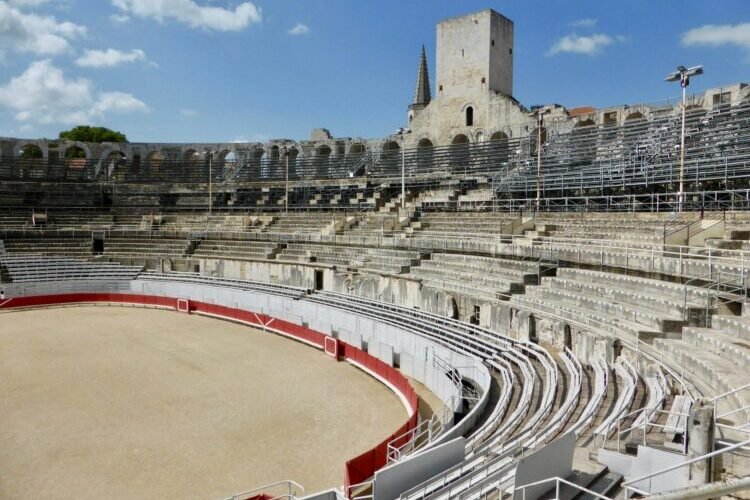
Arles Amphitheatre (Les Arènes)
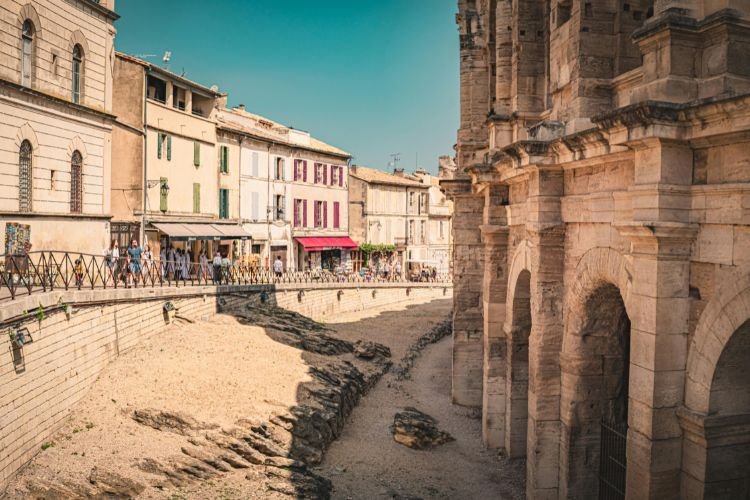
The Arles Amphitheatre is the most iconic Roman site in Arles.
Built around 90 AD, this vast Roman arena could once seat approximately 20,000 spectators. Gladiatorial combats and public spectacles took place here, reinforcing Roman authority and entertaining the masses.
Architecturally, the amphitheatre closely resembles the Colosseum in Rome, with its oval shape and repeating arcades. What makes it especially fascinating, however, is how it evolved. During the medieval period, houses were constructed inside the arena, turning it into a fortified neighborhood. The structure was later restored, but that layered history remains part of its story.
Standing at the center of the arena, you can almost hear the echoes of the crowd. It’s one of the best-preserved Roman amphitheatres in France — and the defining landmark of Roman Arles.
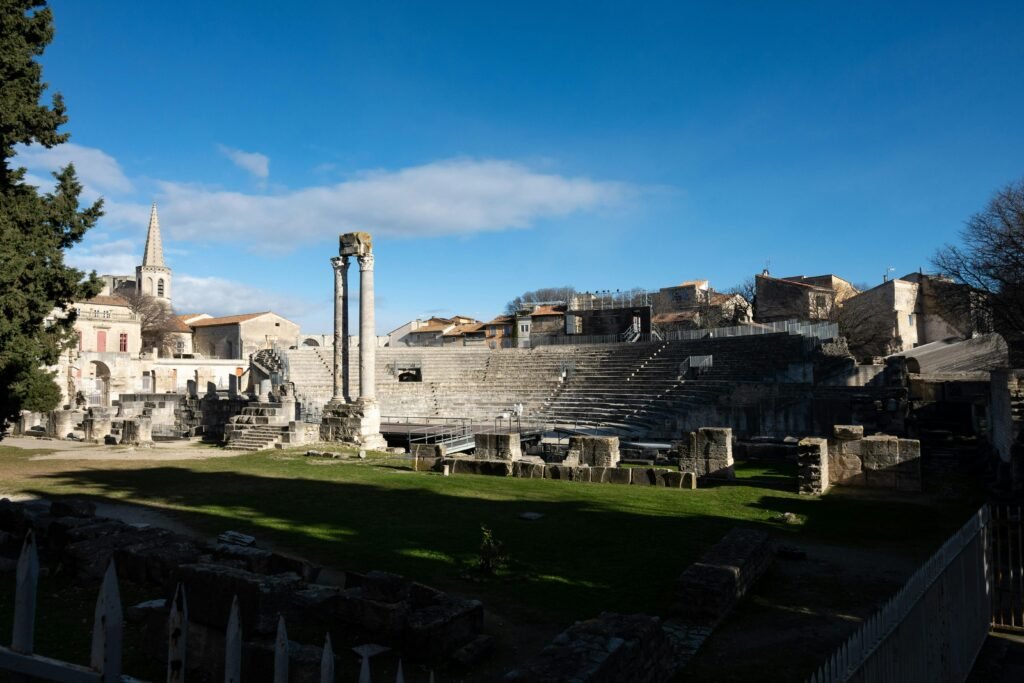
Roman Theatre of Arles
Even older than the amphitheatre, the Roman Theatre of Arles dates back to the 1st century BC, making it one of the earliest stone theatres built in Gaul.
Unlike the arena, this was a space dedicated to performance — drama, poetry, and music. The theatre originally accommodated around 10,000 spectators and was richly decorated with marble statues and architectural ornamentation.
Today, much of the seating has disappeared, but two striking columns still stand behind the stage, creating one of the most photogenic Roman backdrops in Provence.
It feels more intimate than the amphitheatre, and quieter. There’s something poetic about seeing how Roman cultural life once unfolded here — not just spectacle and combat, but art and expression.
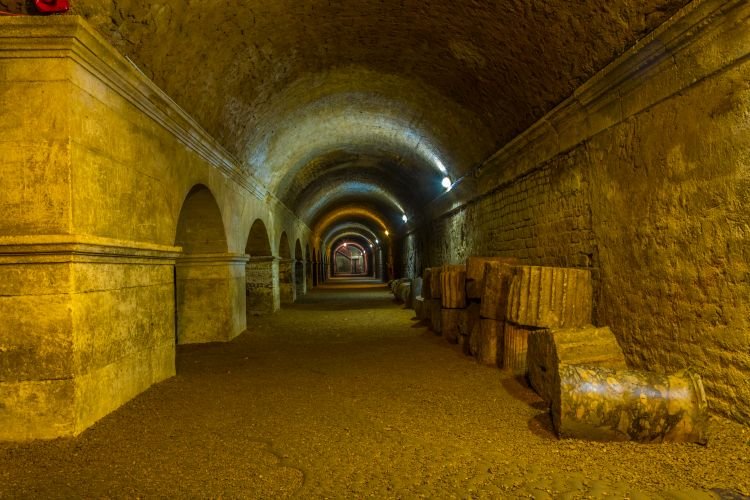
Cryptoportiques of Arles
Beneath the former Roman forum lie the Cryptoportiques — vaulted underground galleries that supported the public square above.
These corridors are among the most atmospheric Roman ruins in Arles. Dimly lit and slightly uneven, they reveal the engineering that made the monumental city possible. While the amphitheatre and theatre showcase Roman grandeur, the Cryptoportiques highlight Roman practicality.
Walking through them offers a rare glimpse into the hidden infrastructure of an ancient city — the bones beneath the beauty.
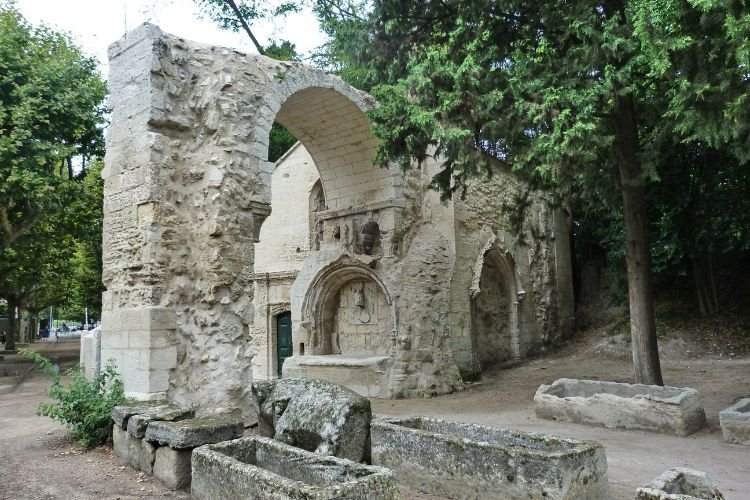
Alyscamps
The Alyscamps, one of the most significant Roman necropolises in the ancient world, are found just outside the historic center.
Roman law required burials to take place beyond the city walls, and over centuries this area filled with stone sarcophagi. During late antiquity and the early Christian era, it became one of the most sought-after burial sites in Europe.
Today, a tree-lined avenue stretches through the site, flanked by ancient tombs. It feels contemplative and peaceful — a striking contrast to the grandeur of the amphitheatre.
The Alyscamps reminds visitors that Roman Arles was not only a place of entertainment and politics, but also ritual, memory, and transition.
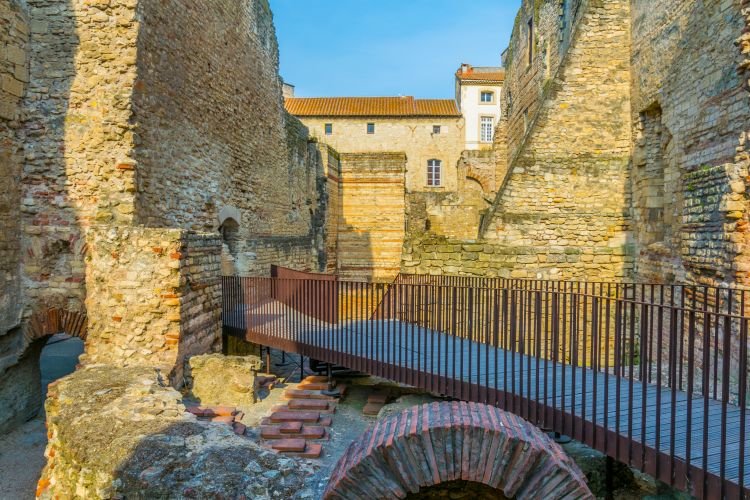
Thermes de Constantin (Baths of Constantine)
Built in the early 4th century, the Thermes de Constantin overlook the Rhône and reflect Arles’ elevated status under Emperor Constantine.
Roman baths were not simply places to wash. They were social centers where citizens exercised, discussed politics, conducted business, and relaxed. Heated floors, steam rooms, and elaborate water systems demonstrated advanced Roman engineering.
Although only portions of the complex remain, the surviving vaulted halls give a strong sense of scale. It’s easy to imagine the sound of water and conversation filling these spaces nearly 1,700 years ago.
Roman Arles in Context: Exploring More Roman Sites in Provence
One of the reasons Arles is so rewarding is that it sits within a broader network of extraordinary Roman sites in southern France.
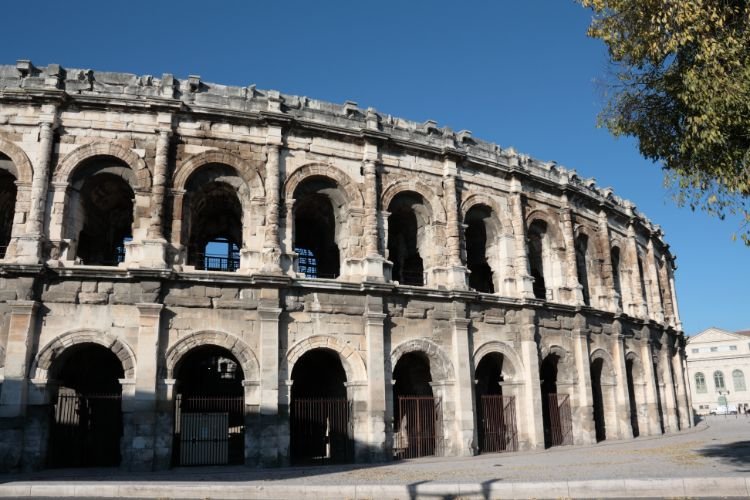
Just under an hour away, Nîmes offers its own remarkably preserved Roman monuments, including the Arènes de Nîmes and the Maison Carrée — one of the best-preserved Roman temples in the world.
Nearby, the spectacular Pont du Gard stands as a testament to Roman hydraulic engineering, its massive arches spanning the Gardon River in breathtaking fashion.
And to the north, the Théâtre antique d’Orange remains one of the most complete Roman theatres in existence, with its monumental stage wall still intact.
Together, these cities form one of the richest concentrations of Roman heritage anywhere outside Italy.
Arles is often the perfect starting point — compact, atmospheric, and layered with history — before branching out to explore the wider Roman legacy of Provence.
If you’re building a Provence itinerary focused on ancient history, combining Arles with Nîmes, the Pont du Gard, and Orange creates an unforgettable journey through Roman Gaul.
Plan Your Visit: Official Arles Tourism Office
For the most up-to-date information on opening times, exhibitions, and events, consult the official Arles tourism office website.
Planning a Roman Road Trip in Southern France?
This guide is part of my complete resource on the best Roman ruins in Southern France, including Nîmes, Arles, Orange, Pont du Gard, and hidden gems across Provence and Occitanie.