The Best Roman Ruins in Southern France
Southern France is one of the richest regions in Europe for Roman ruins — and that’s not an accident.
When the Romans expanded beyond Italy in the 2nd century BC, they didn’t just pass through southern Gaul — they settled it, developed it, and made it a strategic heart of their empire. This region became part of Gallia Narbonensis, a prosperous Roman province connected by the Via Domitia, the first Roman road built in Gaul. In fact, the very name Provence comes from the Latin word provincia — meaning “province” — because this was Rome’s first province outside Italy. Over time, provincia evolved linguistically into “Provence.”
Major cities like Nîmes, Arles, Narbonne, and Orange flourished as trade hubs linking Rome to Spain and the Mediterranean.
Because of that wealth and importance, the Romans constructed monumental infrastructure here: amphitheatres, temples, aqueducts, theatres, baths, bridges, and triumphal arches — many of which are still standing nearly 2,000 years later.
Unlike Rome itself, which was continuously rebuilt, much of southern France preserved its Roman layers. Smaller cities modernized around the monuments instead of demolishing them, and in some cases (like Maison Carrée or Théâtre Antique d’Orange), the structures survived in astonishing condition.
Today, southern France offers one of the most concentrated collections of Roman ruins outside Italy — and many are within an hour of each other, making it possible to create an unforgettable Roman road trip through Provence and Occitanie.
If you’re planning a trip and wondering which Roman sites are actually worth visiting, this guide covers the best Roman ruins in Southern France, organized by city so you can easily plan your itinerary.
Quick Picks: Best Roman Ruins in Southern France
Best overall Roman city:
→ Arles – Multiple major monuments within walking distance, UNESCO-listed, incredibly atmospheric.
Best preserved Roman temple:
→ Maison Carrée – The most complete Roman temple in the world.
Best amphitheatre experience:
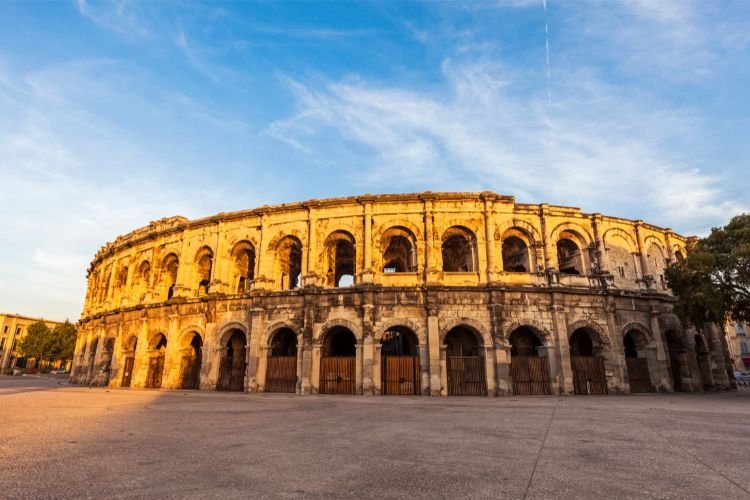
→ Arènes de Nîmes – Monumental scale and still used today.
Most spectacular monument:
→ Pont du Gard – A jaw-dropping Roman aqueduct spanning the Gardon River.
Best Roman theatre:
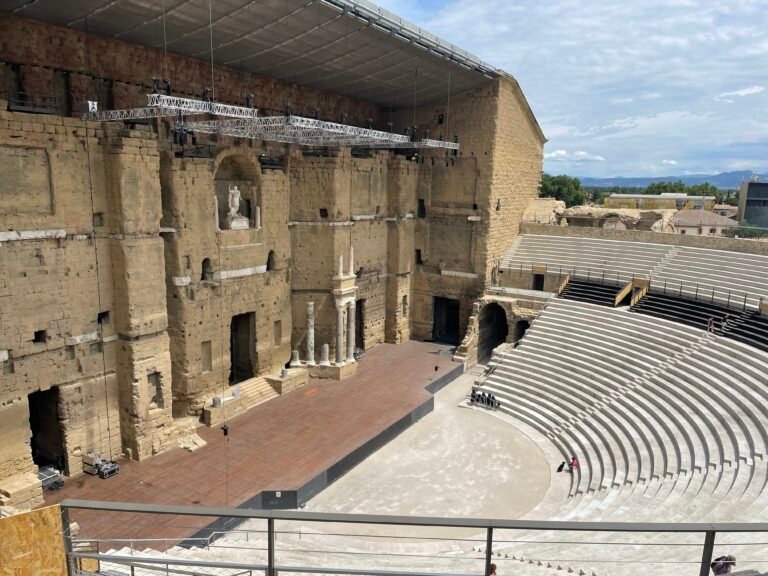
→ Théâtre Antique d’Orange – The best-preserved Roman theatre in Europe.
Best ruins in nature:
→ Glanum – Atmospheric ruins set in the Alpilles hills.
Best for mosaics and wandering:
→ Vaison-la-Romaine – Extensive Roman neighborhoods and an ancient bridge.
The Best Roman Ruins in Southern France (By City)
1. Nîmes – The Most “Roman” City in France
If you want to feel like you’ve stepped into ancient Rome, start in Nîmes.
Often called the “French Rome,” this city has some of the most remarkably preserved Roman monuments in Europe — all within easy walking distance.
What to See in Nîmes:
- Maison Carrée – A pristine Roman temple dating to the 1st century AD.
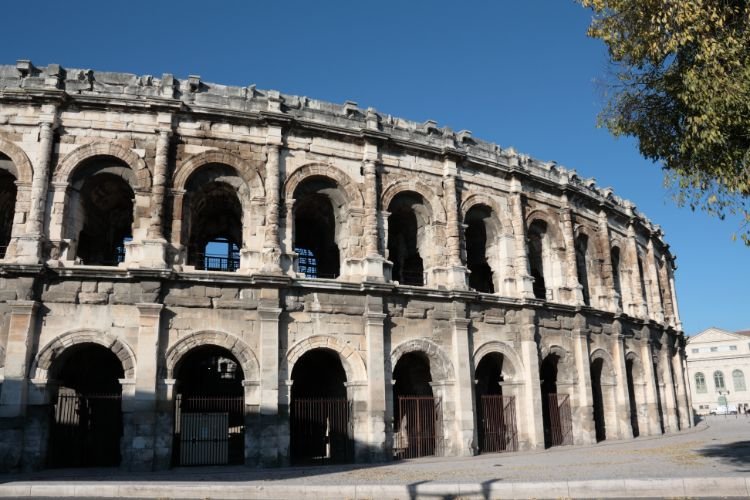
- Arènes de Nîmes – A massive amphitheatre that still hosts events.
- Castellum Aquae – The circular water distribution basin that once received water from the Pont du Gard aqueduct before channeling it throughout the city.
- Jardins de la Fontaine – Ruins integrated into formal gardens.
How long you need: Half day to full day
Best for: First-time visitors to Roman France
2. Arles – Roman Monuments + Provencal Atmosphere
Arles is one of the richest Roman cities in France — and unlike many archaeological sites, these monuments sit within a living Provençal town.
Highlights in Arles:
- The Roman amphitheatre (Arènes)
- The ancient theatre
- Underground cryptoportiques
- The Alyscamps Roman necropolis
- Roman baths remains
The city is a UNESCO World Heritage Site thanks to its concentration of Roman and Romanesque monuments.
How long you need: Full day
Best for: History lovers + photographers
3. Orange – The Best Preserved Roman Theatre
The Théâtre Antique d’Orange is widely considered the best-preserved Roman theatre in Europe — and it is breathtaking in scale.
What to See in Orange:
- Théâtre Antique d’Orange – Featuring its original towering stage wall.
- Arc de Triomphe d’Orange – A monumental Roman arch at the city entrance.
The theatre is still used for performances during the Chorégies d’Orange festival, making it one of the few Roman sites where you can experience acoustics as intended.
How long you need: 2–3 hours
Best for: Theatre lovers + Avignon day trips
4. Pont du Gard – The Most Spectacular Roman Monument
Built in the 1st century AD, this towering aqueduct once carried water to Nîmes.
Today, it remains one of the most dramatic Roman engineering feats in the world.
Unlike city ruins, Pont du Gard feels monumental and cinematic — especially at sunset.
How long you need: 2–4 hours
Best for: Scenic day trip from Nîmes or Avignon
5. Glanum – Ruins in the Alpilles
Just outside Saint-Rémy-de-Provence, Glanum feels like a true archaeological site rather than an urban monument.
Here you’ll find:
- Temple remains
- Residential quarters
- Baths
- A triumphal arch and mausoleum at the entrance
It’s atmospheric, quieter than Nîmes, and surrounded by olive groves and hills.
How long you need: 1.5–2 hours
Best for: Provence road trips
6. Vaison-la-Romaine – Extensive Roman Neighborhoods
Vaison-la-Romaine offers something different: entire Roman residential quarters with visible streets, courtyards, and mosaics.
What Makes It Special:
- Large excavated Roman districts
- A Roman theatre still used for events
- A Roman bridge still standing
- Excellent museum collections
It’s less crowded than Nîmes or Orange but incredibly impressive.
How long you need: Half day
Best for: Slower-paced exploration
7. Narbonne – Walking the Via Domitia
Narbonne was once a major Roman port city.
Today you can:
- Walk on visible sections of the Via Domitia
- Explore the underground Horreum
- Visit the Narbo Via museum
It’s a fascinating stop if you’re exploring Occitanie or heading toward Carcassonne.
How long you need: 2–3 hours
Best for: Occitanie road trips
8. Fréjus – Roman Ruins on the Côte d’Azur
If you’re exploring the French Riviera, Fréjus offers impressive Roman remains near the sea.
Highlights include:
- Amphitheatre
- Aqueduct remains
- Roman theatre
- Archaeological museum
It’s an easy addition to a Côte d’Azur itinerary.
How long you need: 2–3 hours
Best for: Riviera travelers
Planning Your Roman Road Trip in Southern France
If you’re based in:
- Avignon → Orange, Pont du Gard, Glanum, Vaison-la-Romaine
- Nîmes or Montpellier → Nîmes, Pont du Gard, Narbonne
- Aix or Marseille → Arles, Glanum, Orange
Many of these sites are within 1 hour of each other, making it easy to combine multiple Roman ruins into a single itinerary.
FAQ: Roman Ruins in Southern France
Which Roman ruins in Southern France are UNESCO listed?
Arles, Pont du Gard, Maison Carrée (Nîmes), and the Roman monuments of Orange.
What is the best Roman amphitheatre in France?
The Arènes de Nîmes is the most complete, while Arles offers a more atmospheric setting.
Are these ruins worth visiting in summer?
Yes — but go early or late to avoid heat. Many are fully exposed to sun.