Pont du Gard: One of the Greatest Roman Engineering Feats in France
The first time we visited the Pont du Gard, our sons were still kids—and already deep into their Roman history phase. From the moment the arches came into view, they were hooked. It didn’t feel like a dry history lesson or a quick photo stop; it felt alive. They stared up at the stonework, tried to imagine Roman soldiers and engineers moving across it, and then—like many visitors before them—ended up swimming in the river beneath a structure that’s been standing for nearly 2,000 years.
That combination of awe, curiosity, and pure enjoyment is exactly what makes the Pont du Gard such a special place to visit today.
What Is the Pont du Gard?
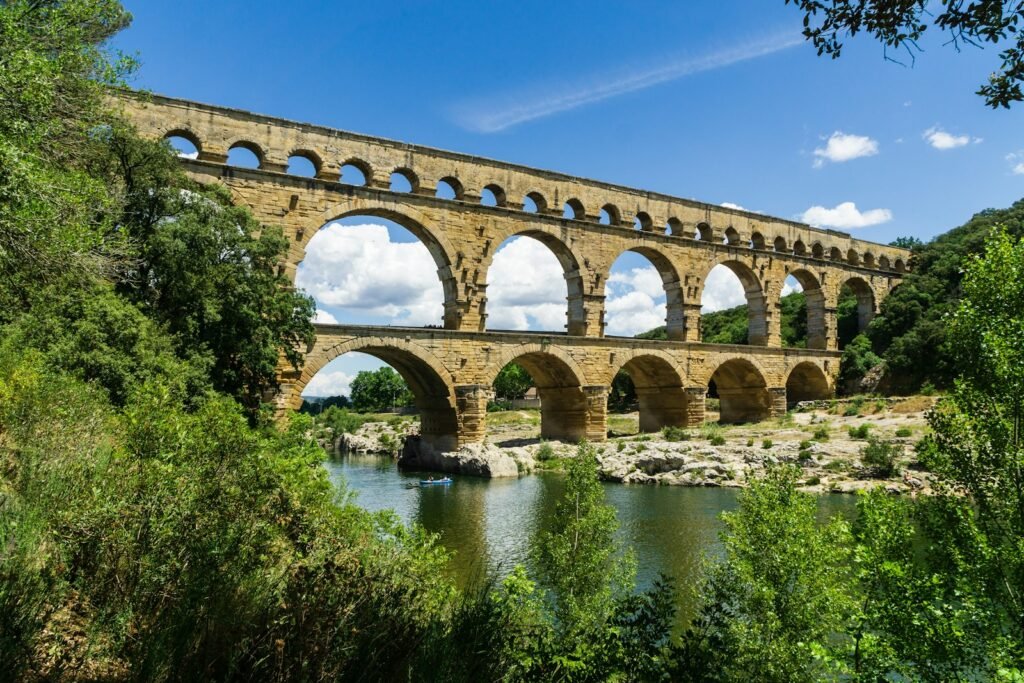
Despite its name, the Pont du Gard isn’t actually a bridge in the traditional sense. It’s part of a Roman aqueduct built in the 1st century CE to carry fresh water to the city of Nîmes, known in Roman times as Nemausus. The aqueduct crosses the Gardon River here, rising in three tiers of arches and reaching nearly 50 meters (160 feet) high—making it the tallest surviving Roman aqueduct bridge in the world.
Constructed from local limestone and assembled without mortar, the Pont du Gard has endured floods, centuries of reuse, and the steady passage of time. Today, it’s protected as a UNESCO World Heritage Site and remains one of the most impressive Roman monuments in France.
Why the Romans Built the Pont du Gard
The Pont du Gard was one dramatic section of a much longer aqueduct system, stretching nearly 50 kilometers (31 miles) from natural springs near Uzès to the Roman city of Nîmes. Its purpose was to supply a growing city with a constant flow of clean water—essential for daily life in a Roman settlement.
Rather than cutting straight lines through the landscape, Roman engineers carefully followed the natural contours of the terrain. In some places the aqueduct ran underground; in others, like here, it soared across valleys in monumental fashion.
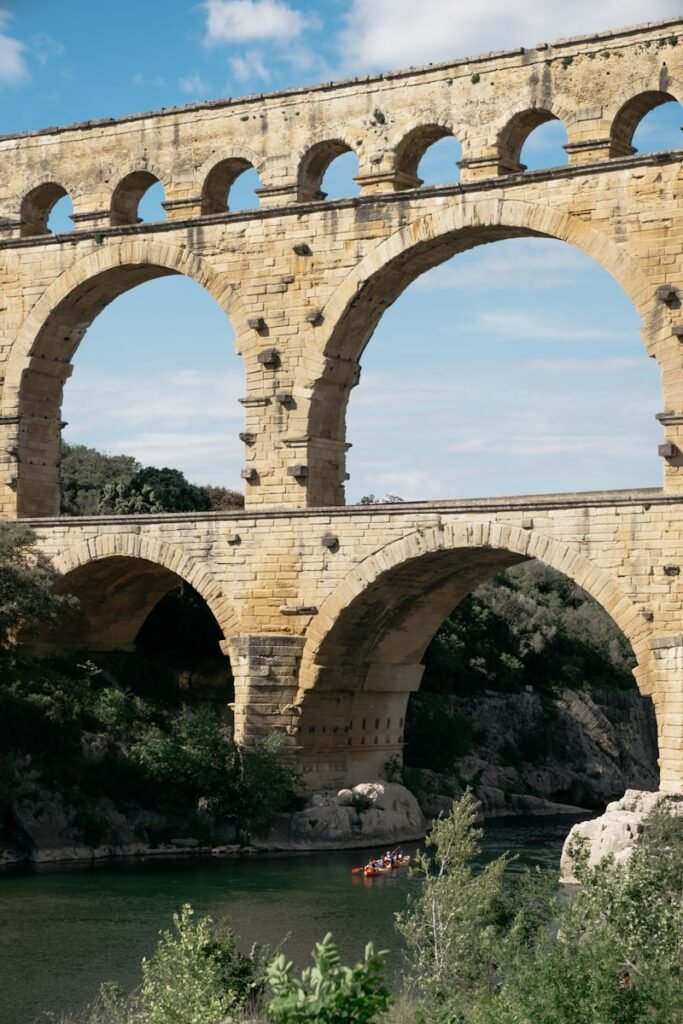
A Marvel of Roman Engineering
What makes the Pont du Gard truly extraordinary is its precision. Over the entire aqueduct route, the water descended by only about 1 inch per mile (roughly 34 centimeters per kilometer). That gentle slope was just enough to keep water flowing smoothly—without causing erosion or stagnation.
Roman engineers achieved this without modern tools. Using surveying instruments and meticulous calculations, they aligned the channel with remarkable accuracy. The massive stone blocks were cut and fitted so precisely that no mortar was needed; gravity and balance alone hold the structure together, which is one reason it has survived for so long.
Ancient Graffiti on the Pont du Gard
If you look closely at the stone, you’ll notice carvings that feel surprisingly personal: ancient graffiti. Workers and later visitors etched names, symbols, and markings into the limestone. Some appear to be tally marks or construction notes; others are simply signatures left behind.
These small details are easy to miss, but they add a human layer to the monument. The Pont du Gard wasn’t just an abstract feat of engineering—it was built, used, and touched by real people whose traces are still visible.
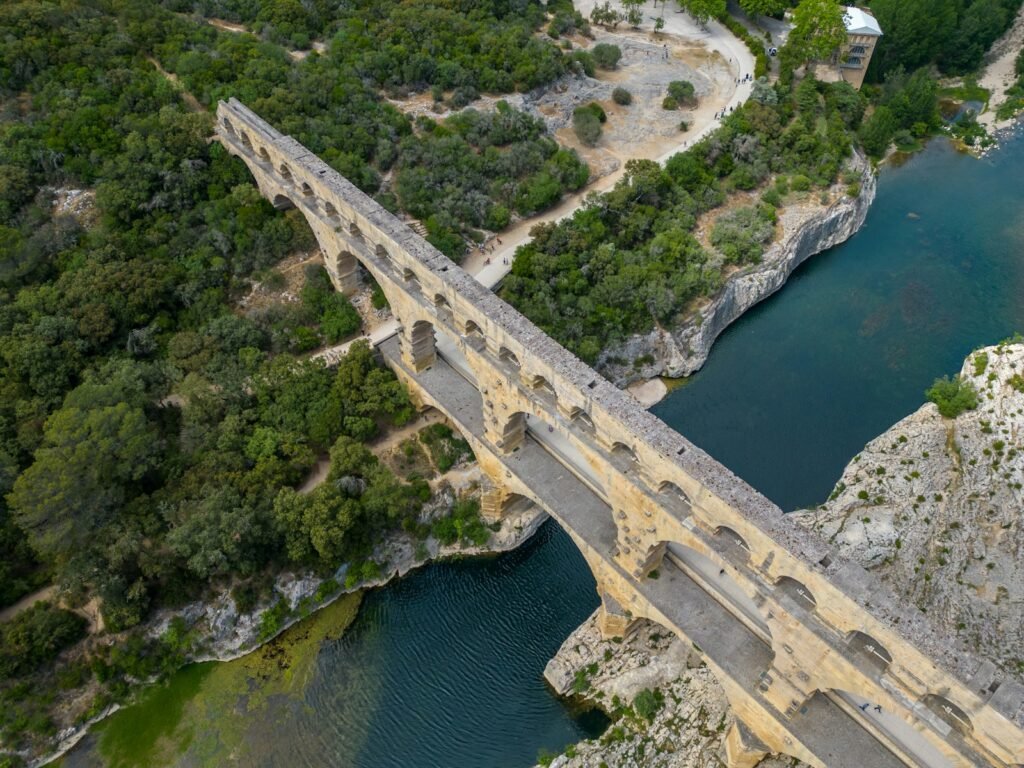
Where the Pont du Gard Aqueduct Led
After crossing the Gardon River, the aqueduct continued on toward Nîmes, where it ended at a precisely designed, circular distribution basin known as a castellum divisorium. From there, water was directed throughout the city via a network of pipes supplying fountains, baths, and homes.
Much of the aqueduct has vanished over time, but the Pont du Gard survived largely because it remained useful. In the Middle Ages, it was adapted into a roadway, protecting it from being dismantled for stone—a fate that claimed many Roman structures elsewhere.
Visiting the Pont du Gard Today
Today, the Pont du Gard is as much a place to experience as it is to admire. Visitors can walk along parts of the structure, explore shaded paths, and swim or wade in the Gardon River below. An on-site museum explains the aqueduct system in clear, accessible terms, making it easy to understand even without a background in Roman history.
It’s especially well suited to families. Children can move freely, cool off in the water, and engage with history in a tangible way, while adults appreciate the scale, craftsmanship, and setting.
For current opening hours, access details, seasonal information, and any temporary restrictions, it’s best to check the official Pont du Gard official site before planning your visit.
How to Visit the Pont du Gard from Nîmes, Avignon, Uzès, or Nice
The Pont du Gard fits easily into a southern France itinerary and can be visited as a half-day excursion or combined with nearby historic towns:
- From Nîmes: about 25 km (30 minutes by car)
- From Avignon: about 30 km (40 minutes by car)
- From Uzès: about 15 km (20 minutes by car)
- From Nice: about 260 km (approximately 3 hours by car)
Many visitors choose Nîmes or Avignon as a base, but the Pont du Gard also works well as a longer day trip from the French Riviera—especially for travelers interested in Roman history who want to venture beyond the coast. Uzès makes an especially pleasant nearby stop, particularly on market days.
Why the Pont du Gard Still Resonates
Standing beneath the arches—or floating in the river while looking up at them—you don’t just see an ancient monument. You feel the confidence and ingenuity of the people who built it.
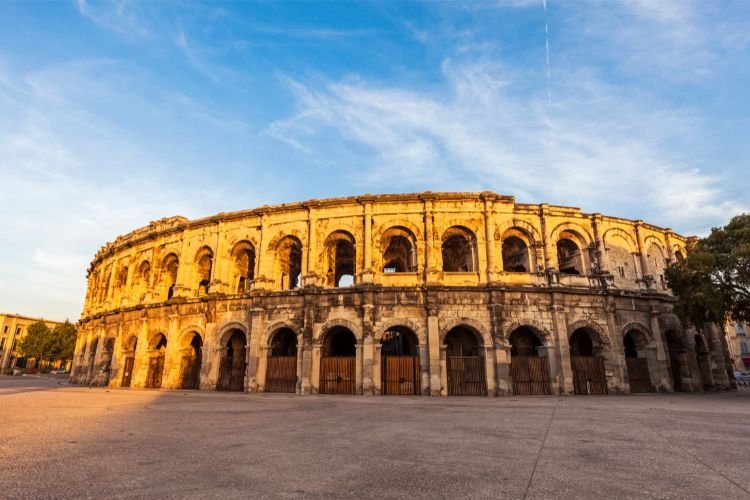
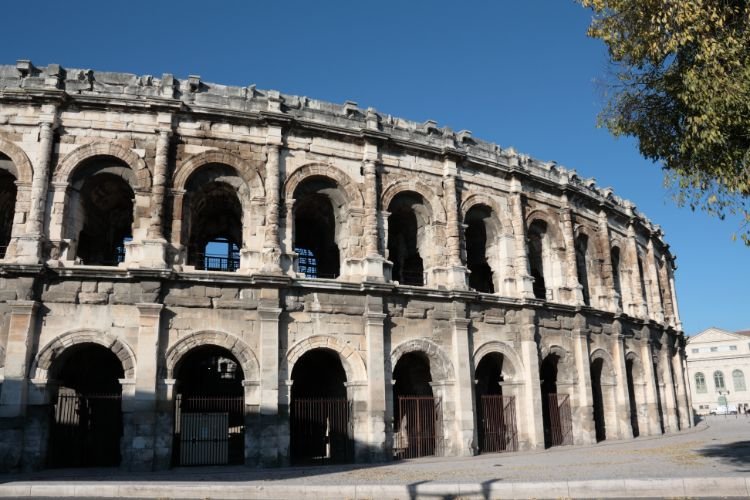
Part of what makes the Pont du Gard so striking is that it’s part of a much broader Roman presence in France—especially in the south, where Roman rule was longest and most concentrated. Cities like Orange, Nîmes, and Arles preserve some of the country’s most impressive remains. The Théâtre antique d’Orange is still used for performances today, while the Arena of Nîmes continues to dominate the city center much as it did in antiquity. Nearby Arles adds another layer, with its amphitheater, baths, and forum remains forming one of the most complete Roman urban ensembles in France.
The Pont du Gard leaves you with a clear sense of how deeply Roman infrastructure shaped southern France—and how much of it still endures.
Planning a Roman Road Trip in Southern France?
This guide is part of my complete resource on the best Roman ruins in Southern France, including Nîmes, Arles, Orange, Pont du Gard, and hidden gems across Provence and Occitanie.