French Jardins: Inside the Unique Style of Yards in France
Even the word itself doesn’t translate neatly to the English “garden.” In France, jardin doesn’t refer only to flowers or vegetables—it often describes the entire outdoor space around a home, what Americans would typically call a yard. That broader meaning matters, because a French jardin isn’t built around a lawn.
Privacy comes first—and it’s built in
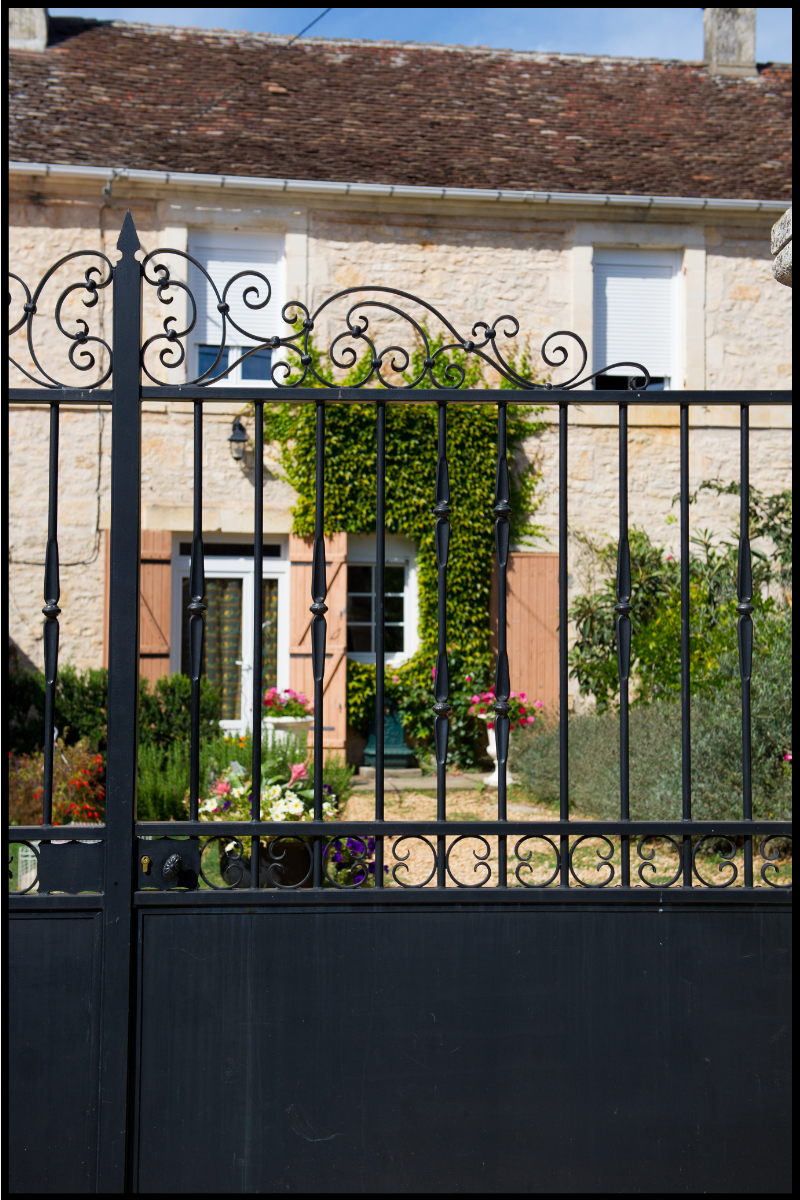
You don’t usually notice a French home’s outdoor space right away—and that’s intentional. Tucked behind hedges, gates, or stone walls, the jardin is meant to be private, revealed rather than displayed. And no two jardins are quite the same. In France, outdoor spaces range from expansive grounds surrounding châteaux and Provençal estates to postage-stamp–sized jardins tucked behind village homes, where every square meter is carefully used.
One of the most defining features of a typical urban French jardin is how enclosed it feels. Unlike in the U.S., where fencing is often limited to the backyard, French properties are frequently enclosed on all sides—including the front. This isn’t about shutting the world out so much as creating a clear transition between public and private life.
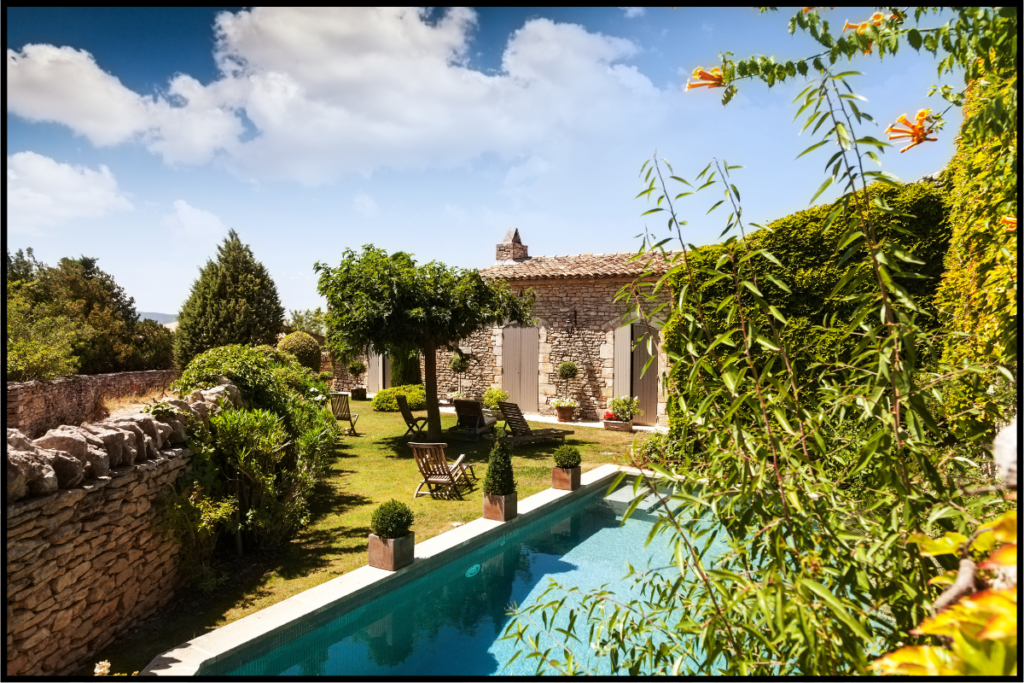
What’s striking is how rarely this enclosure feels harsh. Instead of plain fencing, boundaries are often softened with hedges, climbing vines, shrubs, or stone walls that disappear into greenery. Over time, these living borders blur the line between structure and nature, giving the yard a sense of seclusion without feeling closed in. Once you step inside the gate, the space belongs entirely to the household—and that sense of privacy shapes everything else about how the jardin is used.
Less lawn, more intention
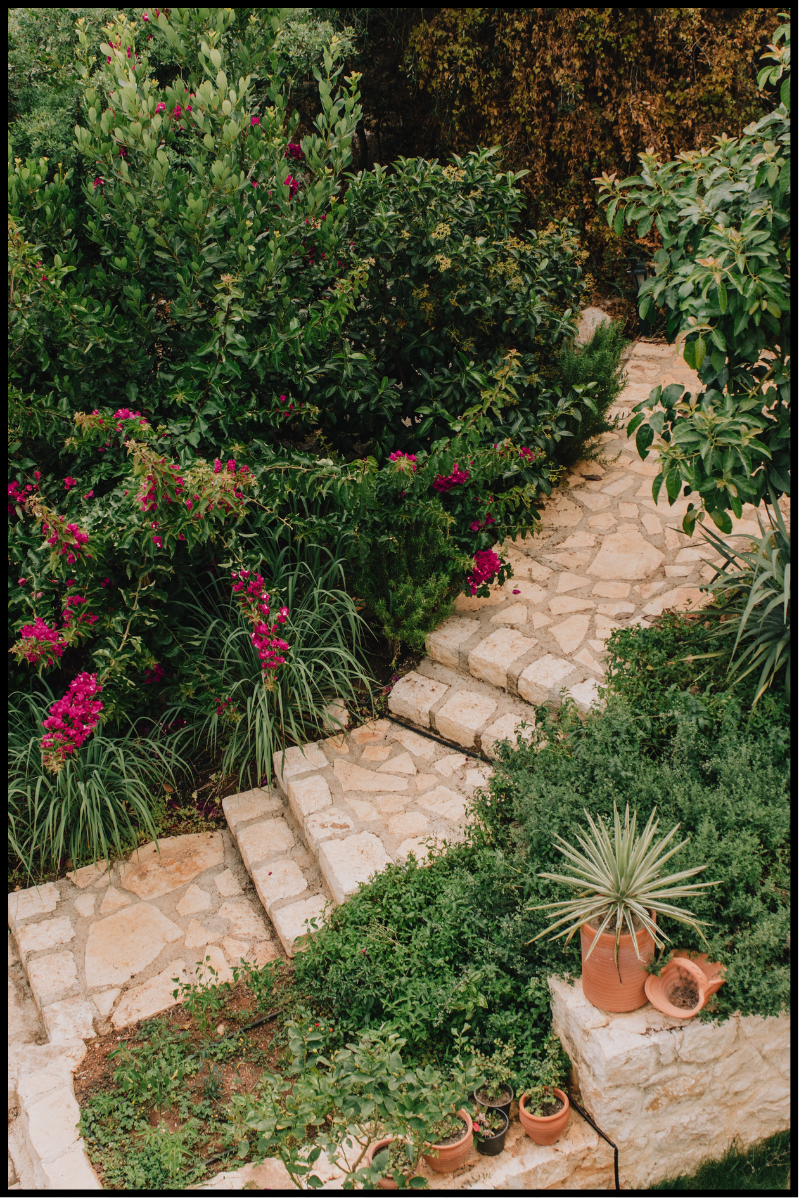
French jardins typically include far less lawn than American yards, and sometimes none at all. Instead of centering the outdoor space around a wide stretch of grass, the design is broken into purposeful areas meant to be lived in—places to sit, walk, dine, and linger. Greenery is still everywhere, but it comes in the form of layered plantings, flowering borders, climbing vines, and pots that soften hard edges rather than a single expanse of turf.
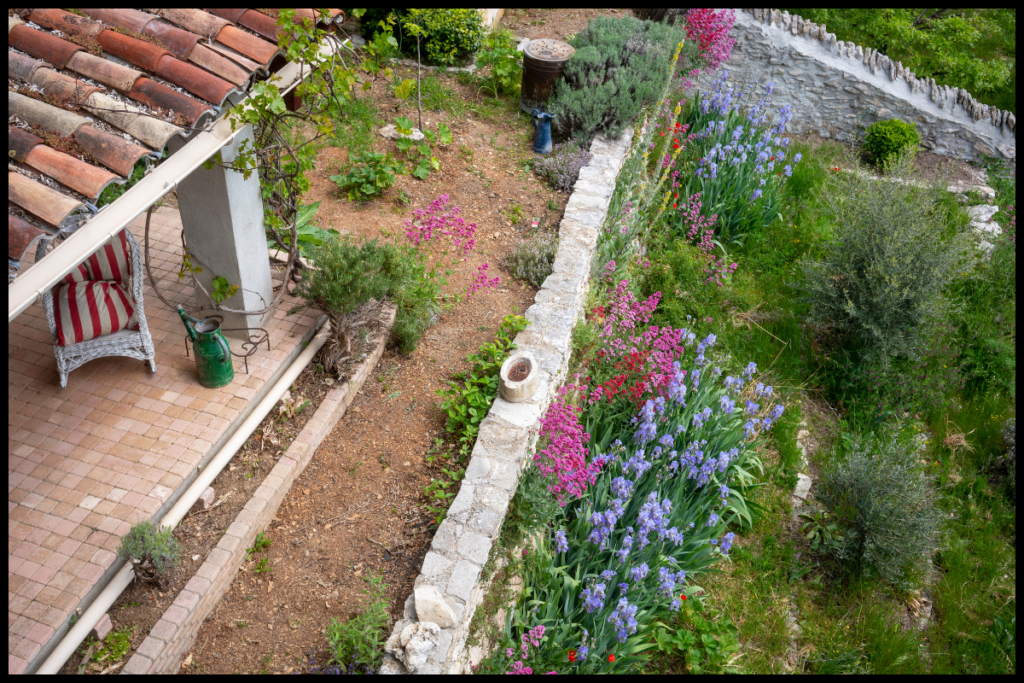
Flowers play a key role in this approach. Rather than large, formal beds, they’re often woven throughout the garden—tucked alongside gravel paths, spilling out of planters, climbing walls, or framing terraces. The effect feels abundant but not manicured, colorful without being showy. This shift away from lawn not only reduces water use and maintenance, it allows the jardin to feel expressive and alive, shaped by seasons rather than mowing schedules.
We actually do keep a small lawn ourselves—for the dogs more than anything. But maintaining it in France has been a cultural adjustment. Lawn chemicals aren’t used in the same way here, so my husband, very much shaped by years of American lawn culture, ended up spending hours hand-weeding what was mostly weeds when we moved in, slowly reseeding bare patches as needed with a drought-resistant grass blend adapted to the Mediterranean climate. I’ll admit, I felt slightly embarrassed at first, convinced our neighbors would see our efforts as painfully “American.”
Then one day, after the grass finally filled in—lush and green despite the southern sun—our neighbor (also a dog-owner) stopped to compliment it and asked what seed we were using so she could try it herself. It was a quiet reminder that while French gardens may reject the idea of a perfect lawn, they’re not opposed to beauty—especially when it’s practical and works naturally with the climate.
More generally, French gardens tend to coexist peacefully with a certain amount of “wildness.” Weeds aren’t always treated as enemies, and late mowing or hedge trimming is often encouraged to support bees, insects, and nesting animals—a philosophy that prioritizes ecological balance over visual perfection.
Gravel as a quiet design signature
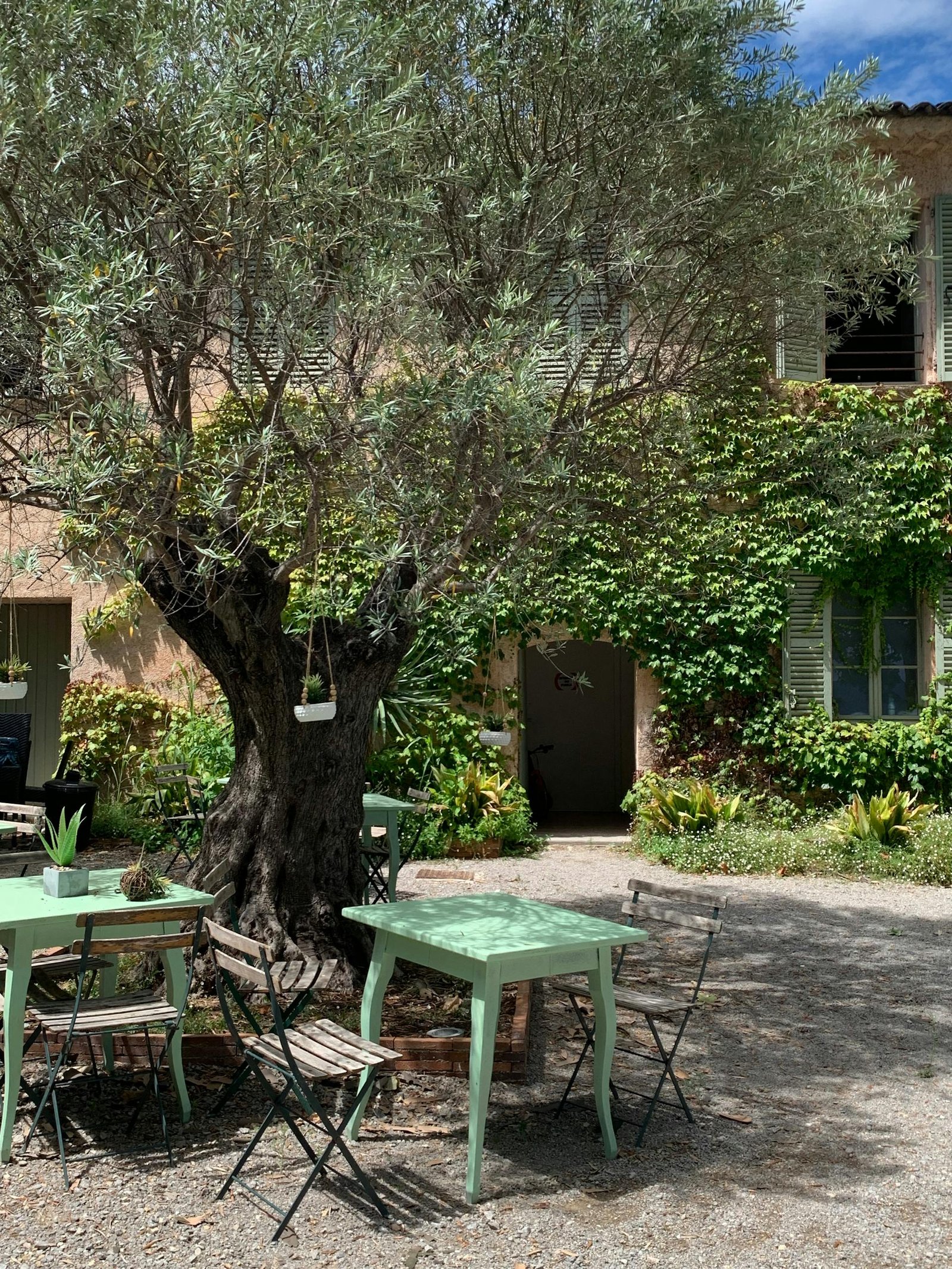
Gravel plays a quiet but defining role in French jardins, but instead of rough industrial fill, French gravel is typically fine, pale, and softer underfoot—often limestone-based, beige, cream, or light gray in tone. It reflects light rather than absorbing it, which helps outdoor spaces feel brighter and cooler in summer.
Used in paths, courtyards, and seating areas, this type of gravel creates structure without feeling rigid. It crunches gently when you walk, edges blur into planted beds, and over time it takes on a slightly worn, lived-in look that feels intentional rather than neglected. Paired with greenery, stone walls, or terracotta pots, it gives French gardens their relaxed elegance—orderly, but never severe.
More than a design choice, this gravel supports the French approach to outdoor living: low maintenance, water-wise, and practical, yet visually calm. It’s one of those elements that looks effortless precisely because it isn’t trying to make a statement.
Gardens that belong to their region
Plant choices within the jardin often reflect the local climate rather than an idealized, one-size-fits-all vision of what a yard “should” look like. In the south, that might mean drought-tolerant plants and silvery foliage; elsewhere, it may be hardy shrubs, climbers, and perennials that thrive without constant attention.
In some regions, the climate allows for plantings that feel unexpectedly lush—palms, figs, or Mediterranean varieties appearing alongside more traditional garden plants, thanks to the effect of France’s unique climate, which often feels warmer and milder than other places at the same latitude.
The result is a garden that feels natural rather than curated—one that evolves with the seasons instead of fighting them. This regional sensibility is a big part of why French outdoor spaces often look so harmonious, even when they’re simple.
Living happens on the terrace
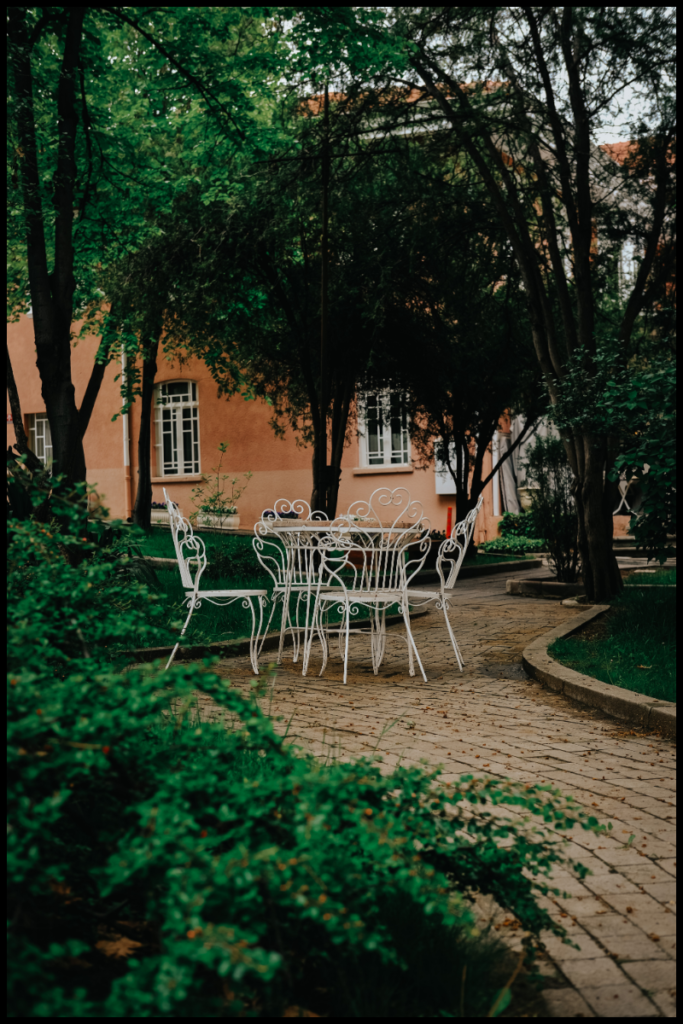
If the lawn isn’t the centerpiece, the terrace usually is. Most French jardins are organized around a patio or terrace that opens directly off the house, often from the kitchen or main living space. This is where daily life spills outside.
Because shade matters, especially in summer, awnings and covered areas are common. Retractable fabric awnings, pergolas, and vine-covered structures create outdoor rooms that can be used comfortably throughout the day. These shaded spaces encourage long lunches, late dinners, and the slow rhythm of outdoor living that French life is known for.
Increasingly, French jardins are also places to cook. What might once have been a simple barbecue has evolved into fully planned outdoor cooking areas—sometimes modest, sometimes surprisingly elaborate. Pizza ovens, planchas, fire pits, and summer kitchens turn the jardin into a social hub, especially in warmer months.
A jardin is a way of living, not a design trend
What makes French jardins unique isn’t any single feature. It’s the mindset behind them. These spaces prioritize privacy over visibility, usefulness over size, and comfort over perfection. They’re less about having a picture-perfect lawn and more about creating an outdoor extension of the home—somewhere to live, gather, and slow down.
In the end, a French jardin isn’t necessarily designed to be noticed—it’s designed to be lived in, and the quiet, magazine-worthy charm emerges without ever being forced.